
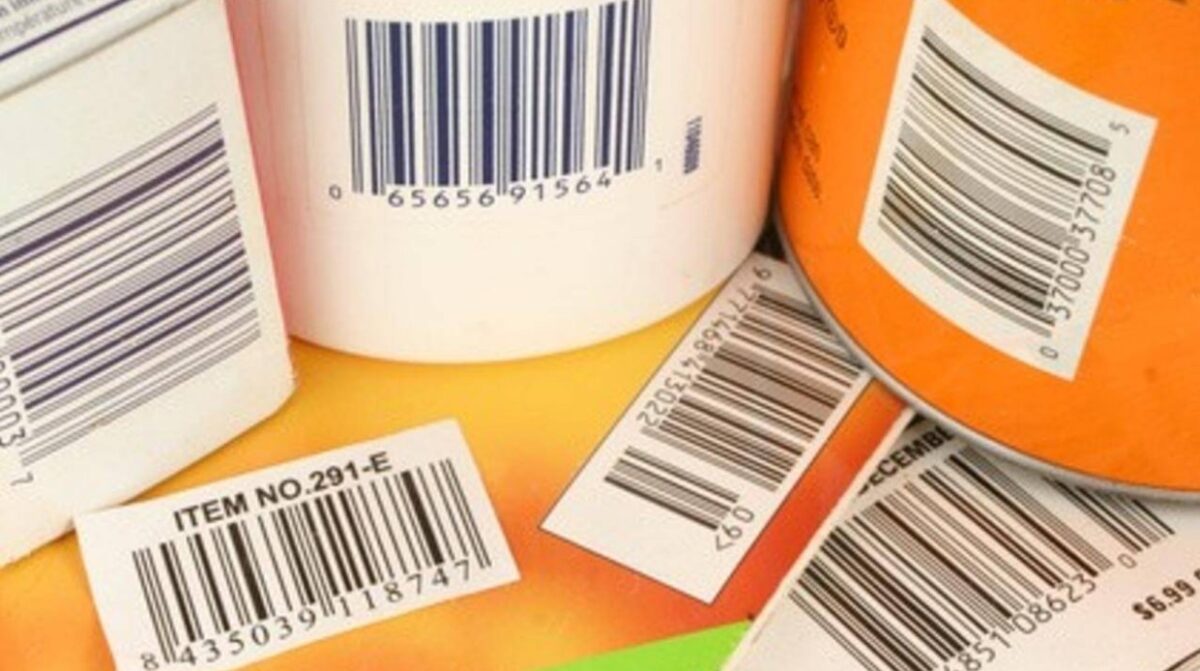
As supply chains become more complex and regulatory requirements grow stricter, manufacturers and brands need more reliable ways to track products and protect them from counterfeiting or diversion. 2D barcodes have emerged as a powerful solution, offering far more data capacity, flexibility, and security than traditional linear barcodes. Today, they play a critical role in traceability, inventory management, and consumer engagement across industries.
This article explores how 2D barcodes work, why they matter, and how they are shaping the future of product tracking and security.
The Basics of 2D Barcodes
2D barcodes, also known as two-dimensional barcodes, store information both horizontally and vertically. Unlike traditional 1D barcodes that hold limited data in a single line, 2D barcodes can contain significantly more information in a compact space.
Common types of 2D barcodes include QR codes and Data Matrix codes. These formats are designed to remain readable even when partially damaged, thanks to built-in error correction. This makes them especially well-suited for demanding manufacturing, logistics, and retail environments.
Another defining feature of 2D barcodes is their versatility. They can store product identifiers, batch numbers, expiration dates, URLs, serial numbers, and even encrypted data. This flexibility allows a single code to support multiple use cases across the product lifecycle.
Benefits of Using 2D Barcodes
The adoption of 2D barcodes continues to accelerate because of the tangible benefits they deliver across operations and supply chains.
One of the most significant advantages is data density. A small 2D barcode can hold far more information than a traditional barcode, reducing the need for multiple labels or markings. This is especially valuable for small packages or minimalist packaging designs.
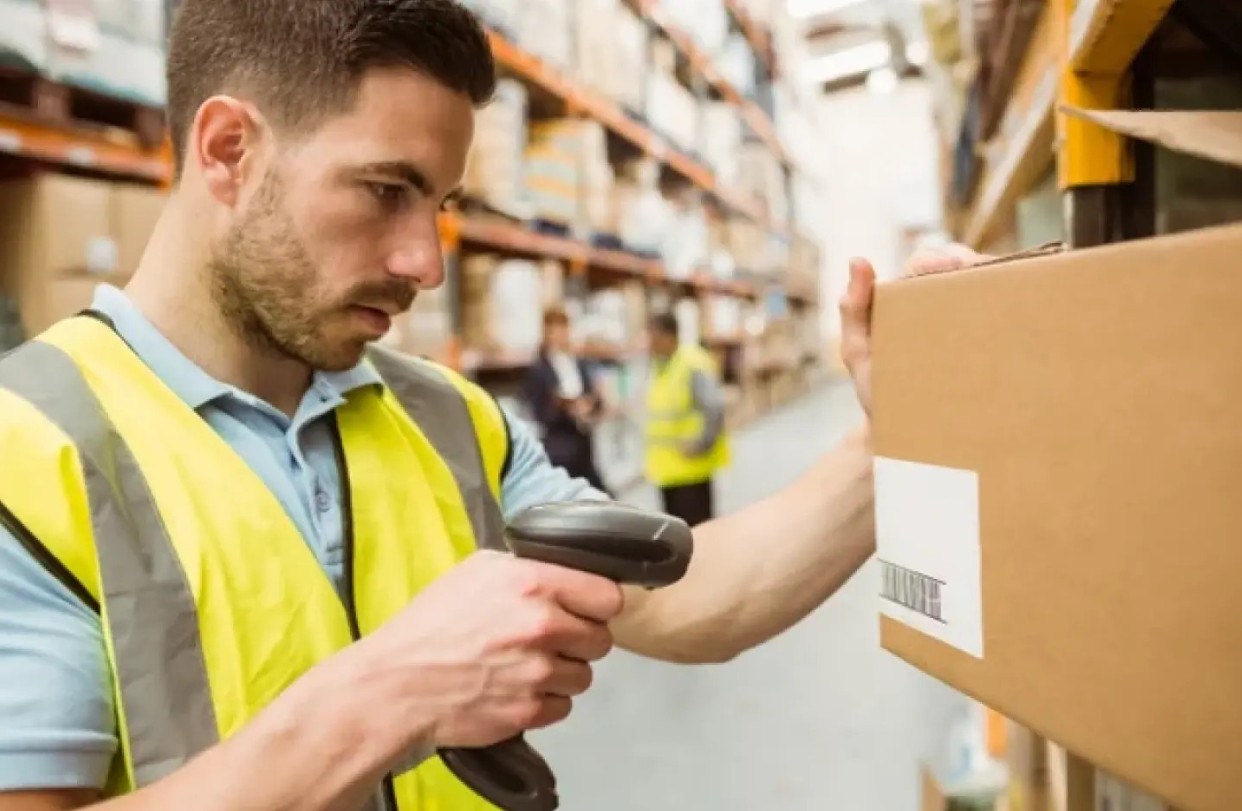
2D barcodes also enhance accuracy and efficiency. They can be scanned quickly and reliably from any orientation, reducing scanning errors and speeding up processes in warehouses, production lines, and retail environments.
From a traceability perspective, 2D barcodes enable end-to-end visibility. Manufacturers can track products from production through distribution and into the hands of consumers. This supports faster recalls, better quality control, and improved regulatory compliance.
Security is another major benefit. When combined with serialization or encryption, 2D barcodes make it far more difficult for counterfeit products to enter the supply chain undetected.
Popular Applications of 2D Barcodes
2D barcodes are used across a wide range of industries and applications, reflecting their adaptability and value.
In manufacturing, they support lot tracking, work-in-progress monitoring, and quality assurance. Each product or component can be uniquely identified and tracked through every stage of production.
In logistics and distribution, 2D barcodes streamline inventory management and shipping verification. Scanning a single code can instantly reveal destination data, handling instructions, and shipment history.
Retailers use 2D barcodes to enhance point-of-sale operations and improve product information access. Many consumers are already familiar with scanning QR codes to access promotions, product details, or brand content.
In regulated industries such as pharmaceuticals, food, and medical devices, 2D barcodes are essential for compliance. They enable precise tracking, authentication, and reporting required by global regulations.
How to Create 2D Barcodes
Creating effective 2D barcodes requires more than simply generating a code. It starts with defining the data structure and purpose of the code.
Manufacturers must determine what information needs to be included—such as product IDs, batch numbers, or URLs—and how that data will be maintained and updated. Standardized formats are often used to ensure compatibility across systems and partners.
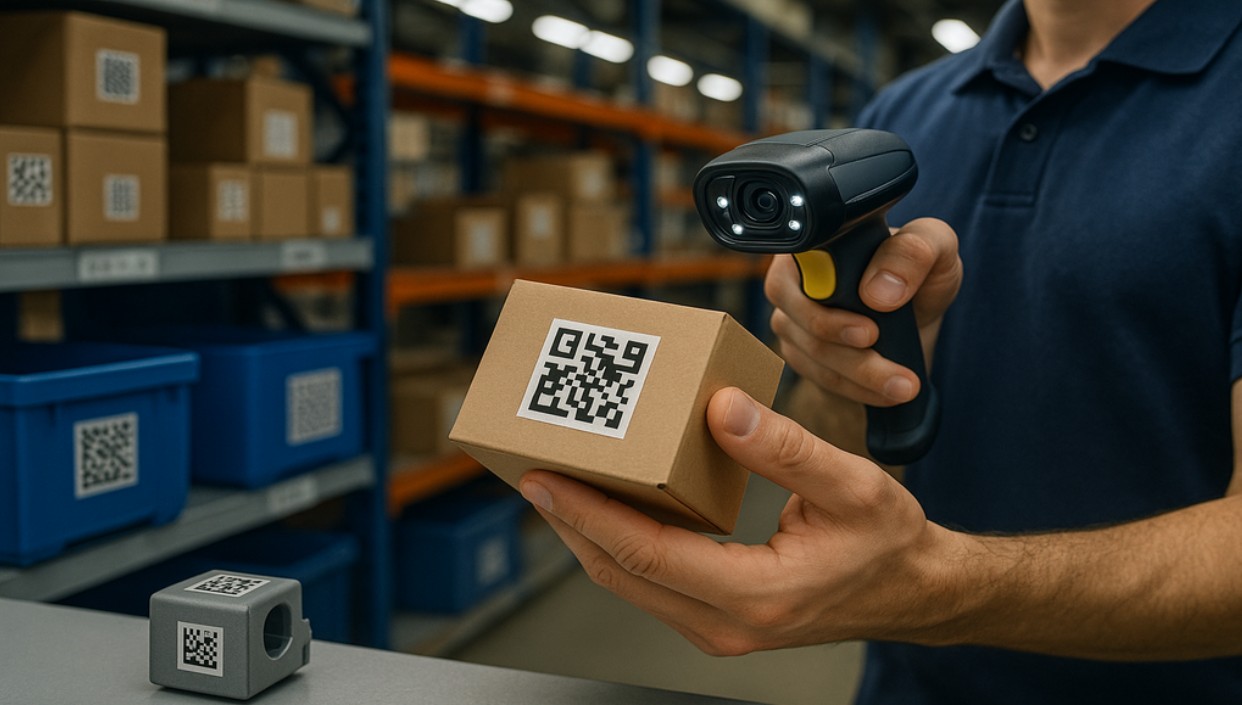
Next, the barcode must be generated using reliable software that supports error correction and data validation. Print quality is critical. Poor contrast, distortion, or incorrect sizing can render a code unreadable.
Finally, the barcode must be applied consistently during production. This requires precise marking or printing systems capable of producing high-resolution, repeatable codes at line speed. Verification systems are often used to confirm readability and accuracy in real time.
Enhancing Security with 2D Barcodes
Security is one of the most compelling reasons to adopt 2D barcodes. Counterfeiting, diversion, and tampering are growing concerns across global supply chains, and 2D barcodes provide a strong line of defense.
Serialization is a key security strategy. By assigning a unique 2D barcode to each individual product, manufacturers can track authenticity and movement at the unit level. Any duplicate or invalid code can be quickly identified.
Encryption and secure databases further enhance protection. When sensitive data is encoded or linked to secure systems, unauthorized replication becomes significantly more difficult.
2D barcodes also support tamper-evident strategies. When applied across seals or closures, they can reveal whether a package has been opened or altered. This builds trust with both regulators and consumers.
Future Trends in 2D Barcode Technology
The future of 2D barcodes is closely tied to digital transformation and smart packaging initiatives. As connectivity increases, these codes are becoming gateways to richer data and real-time insights.
One major trend is the integration of 2D barcodes with cloud-based platforms. This allows data to be updated dynamically without changing the physical code, enabling new use cases throughout the product lifecycle.
Consumer engagement is also expanding. Brands are using 2D barcodes to deliver personalized content, sustainability information, and interactive experiences that extend beyond the shelf.
Automation and artificial intelligence will further enhance scanning, verification, and analytics capabilities. As standards evolve and adoption grows, 2D barcodes are poised to become the universal language of product identification and security.

Conclusion
2D barcodes have moved far beyond simple identification tools. They are now essential components of modern product tracking, security, and engagement strategies. By enabling richer data, stronger protection, and greater visibility, they help manufacturers and brands operate more efficiently while meeting rising expectations for transparency and trust.
As technology continues to advance, organizations that invest in robust 2D barcode strategies will be better positioned to adapt, scale, and compete in an increasingly connected world.
Contact REA JET to explore how agile coding and marking can unlock your packaging potential.