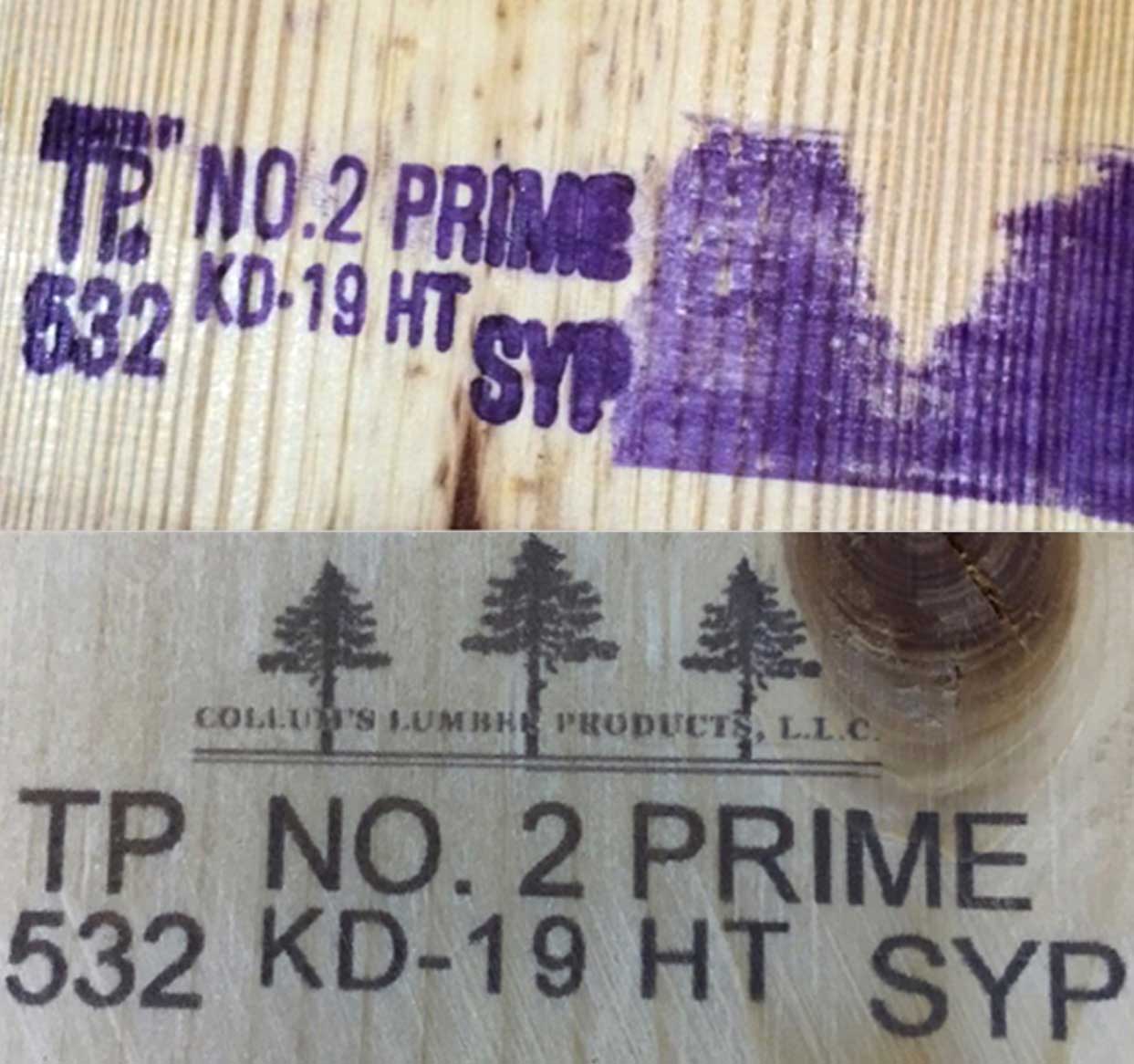
Lumber and engineered wood manufacturers have more options than ever for automating product identification. From grade and production information to logos, tracking data, and machine-readable codes, today’s marking systems can turn a once-simple production step into an integrated part of the manufacturing process.
But choosing the right technology isn’t always straightforward.
Two technologies that may be considered for certain wood applications are laser marking and industrial inkjet. Each creates a mark in a fundamentally different way, and each has advantages and limitations depending on the substrate, production environment, code requirements, and desired result.
When evaluating lumber marking and coding, the right question isn’t simply, “Which technology is better?”
It’s: “Which technology is better for this particular application?”
Understanding how laser and inkjet technologies differ can help lumber, plywood, MDF, OSB, and other wood-product manufacturers make a more informed decision.
Understanding Lumber Marking and Coding Requirements
Before comparing technologies, manufacturers should define what they actually need to accomplish.
A wood-product marking application might require:
- Grade or product information
- Mill identification
- Production dates
- Batch or lot information
- Dimensions
- Shift or line information
- Logos and branding
- Variable production data
- Barcodes or 2D codes
- Internal traceability information
The substrate matters just as much as the message.
Smooth MDF, laminated panels, plywood, highly textured OSB, and rough-sawn lumber provide very different marking surfaces. Moisture, grain, color, dust, coatings, surface consistency, and product movement can all influence the finished result.
The best lumber marking and coding system is therefore one that balances the required mark with the realities of the production environment.
How Laser Marking Works
Laser marking creates a mark by using focused energy to alter the surface of a material. Depending on the material and laser technology, that interaction can create contrast through effects such as discoloration, removal of a surface layer, or other physical changes.
Unlike inkjet, laser marking doesn’t deposit ink onto the product.
That provides one of its most recognizable advantages: there is no ink consumable involved in producing the mark.
Laser systems can also produce highly precise marks when the substrate is suitable and the application has been properly engineered.
However, wood is a variable organic material, and laser interaction with it can depend heavily on surface characteristics, wood type, coating, color, and other factors.
For that reason, application testing is essential before assuming that laser marking will produce the desired result on a specific lumber or wood-panel product.
How Industrial Inkjet Coding Works
Inkjet technology takes a different approach.
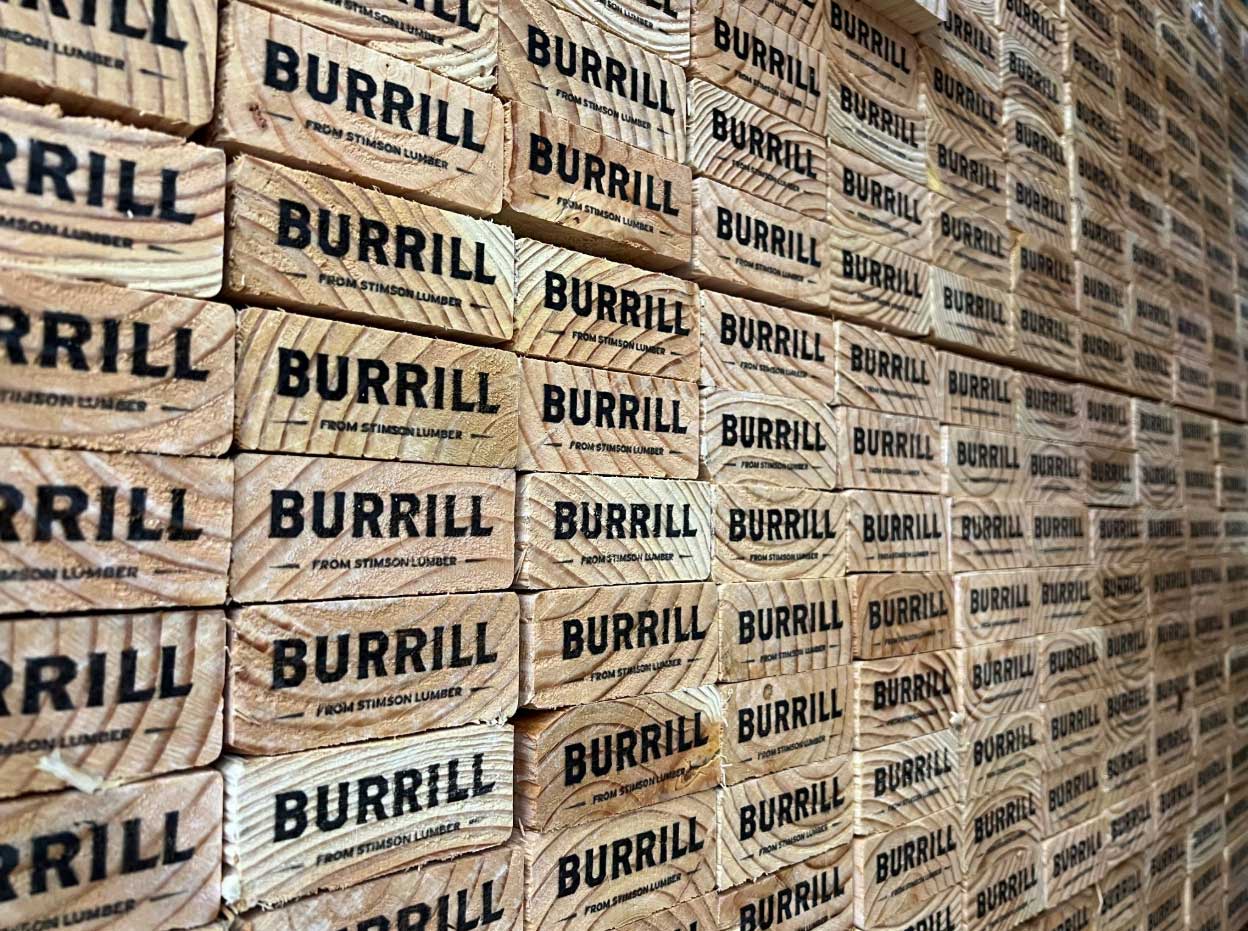
Instead of changing the substrate, an inkjet system deposits ink onto its surface. Because the process is non-contact, the printer can mark products while they move through an automated production line.
Industrial inkjet systems are available in different configurations depending on the application.
Large-character systems can create bold, highly visible text and identification information on challenging industrial substrates. Higher-resolution systems can produce finer text, graphics, and other detailed information when the substrate and production conditions support it.
For lumber marking and coding, this range of options makes inkjet particularly versatile.
Manufacturers can match the printer, ink, printhead configuration, and controls to the type of wood being marked and the information required.
Substrate Differences Matter
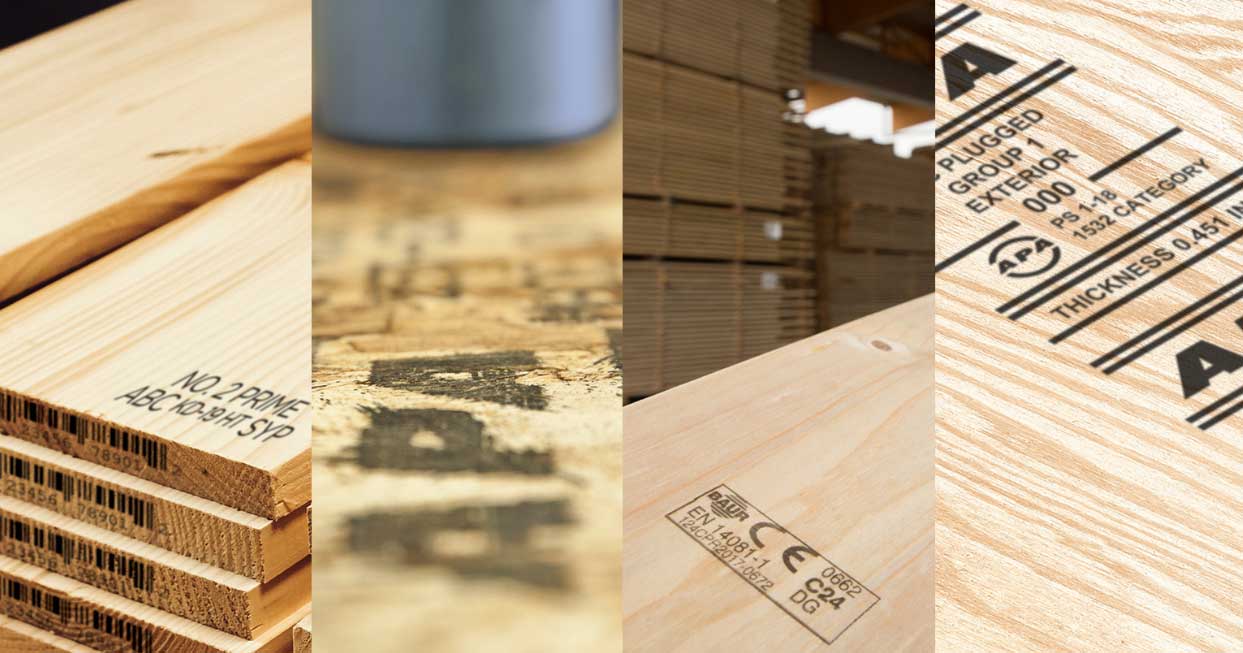
Wood isn’t one substrate. It’s an entire category of substrates.
This is one of the most important considerations when comparing laser and inkjet.
Solid Lumber
Solid lumber can vary considerably in grain, moisture, texture, color, and surface condition.
Rough-sawn wood presents a different challenge than planed lumber. One species may interact differently with a laser or ink than another.
Inkjet can provide strong contrast by applying ink directly to the surface, but ink performance must be tested for adhesion, absorption, drying, and readability.
Laser performance similarly needs to be evaluated on the actual wood because the resulting contrast and appearance depend on how the material reacts to the laser.
MDF
MDF generally provides a more consistent surface than natural lumber.
That can make it a better candidate for applications requiring detailed marking. Both laser and inkjet may be possibilities depending on the exact surface, mark, and production requirements.
If MDF has a coating, laminate, or other finished surface, however, that surface needs to be evaluated independently.
Plywood
Plywood combines natural wood characteristics with a manufactured panel structure.
Surface grain, veneer quality, knots, coatings, and whether the mark is being applied to the face or edge can all affect the result.
Again, testing becomes critical.
OSB
OSB presents a particularly irregular surface because of its large, oriented wood strands.
That texture can make extremely fine markings difficult regardless of technology.
For some OSB applications, a bold, large-character inkjet mark may offer practical advantages because the mark can be designed around the irregular substrate rather than attempting to reproduce extremely fine detail.
Comparing Mark Quality
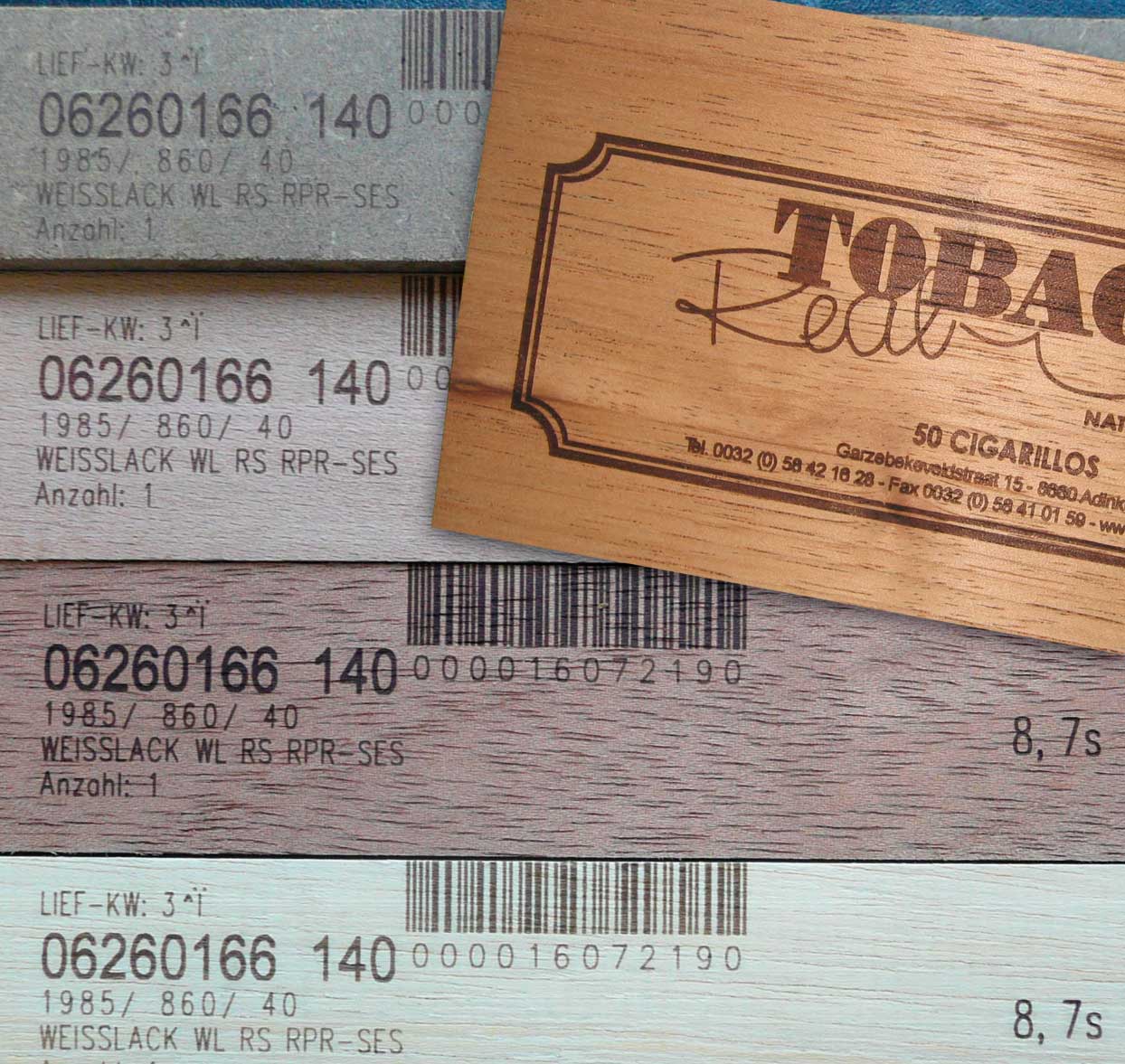
Both laser and inkjet systems can produce high-quality marks, but “quality” should be defined according to the application.
If a manufacturer requires a small, precise permanent mark on a compatible, consistent surface, laser technology may deserve consideration.
If the objective is high-contrast information that needs to remain readable across variable wood surfaces, industrial inkjet may offer advantages.
Inkjet also gives manufacturers the ability to select inks that create visual contrast against the wood.
The natural color of the substrate matters. A technically precise mark isn’t useful if operators or downstream users can’t easily see it.
For lumber marking and coding, readability should take priority over specifications that don’t provide a meaningful production benefit.
Permanent Marking vs. Applied Ink
One of the fundamental differences between laser and inkjet is the nature of the finished mark.
Laser changes the material itself, which can create a durable mark without adding ink.
Inkjet creates a mark by applying ink to the substrate.
Which approach is preferable depends on the product’s journey after marking.
Manufacturers should consider handling, stacking, storage, environmental exposure, abrasion, and how long the mark needs to remain readable.
The required durability should be defined before equipment selection.
If inkjet is being considered, the ink should be tested under realistic downstream conditions. If laser is being considered, the resulting surface change and contrast should similarly be tested on the actual product.
Variable Data and Production Flexibility
Modern wood manufacturers frequently need to change the information being printed.
Different runs may require different grades, dimensions, production dates, batch numbers, logos, or other identifiers.
Both digitally controlled laser and inkjet systems can support variable information, depending on system configuration and integration.
The larger question is how easily the marking equipment can connect with the production process.
A properly integrated system can receive data from production controls and automatically update the message associated with a particular product or manufacturing run.
This can reduce manual intervention and help minimize errors caused by operators selecting incorrect messages.
For facilities processing many SKUs, this flexibility can be a major consideration when evaluating lumber marking and coding equipment.
Line Speed and Production Integration
A marking technology is only useful if it can keep up with the line.
Manufacturers should evaluate maximum production speed, product spacing, code size, marking location, and available marking time.
Product detection is also important.
Sensors can identify when a board or panel enters the marking area and trigger the appropriate message. More advanced systems can integrate with production controls to determine which message belongs on each product.
Both laser and inkjet systems require proper integration, but the physical installation requirements can differ.
Laser systems require careful attention to guarding, extraction, safety controls, and the interaction between the laser and substrate.
Inkjet systems require proper printhead positioning, ink management, product detection, and controls.
The complete installation—not simply the marking device—should be considered when comparing technologies.
Maintenance and Consumables
Operating cost is another important difference.
Inkjet requires ink and may require other consumables depending on the technology. Printheads and ink delivery components also need appropriate maintenance.
Laser marking eliminates ink as a printing consumable, but that doesn’t mean the overall system operates without maintenance or cost. Optical components, extraction systems, protective equipment, and other system elements need to be considered.
Rather than comparing ink cost against “no ink,” manufacturers should evaluate total cost of ownership.
That includes:
- Initial equipment cost
- Installation and integration
- Consumables
- Routine maintenance
- Replacement components
- Operator time
- Downtime
- Technical support
- Expected equipment life
A technology that appears less expensive on one metric can be more expensive when the complete application is considered.
Safety and Production Environment
Wood manufacturing environments can contain significant amounts of dust and debris.
That needs to be considered for any marking technology.
Industrial inkjet equipment should be installed and maintained appropriately for the production environment.
Laser applications require additional engineering considerations because the process uses focused energy to interact with the substrate. Proper guarding, extraction, and application-specific safety controls are essential.
Wood and wood-derived materials can also respond differently to laser energy depending on composition and surface treatment.
For these reasons, laser suitability should be assessed by qualified application specialists rather than assumed based on results from another material.
When Does Inkjet Make Sense for Lumber and Wood Panels?
Inkjet can be particularly attractive when manufacturers need:
- High-contrast marks
- Large, readable characters
- Variable production information
- Non-contact printing
- Flexibility across multiple wood products
- Integration with automated production
- Logos, text, or changing messages
- A solution for rough or variable surfaces
Large-character inkjet can be especially useful for demanding industrial wood and building-material applications.
REA JET’s DOD technology, for example, is designed for robust industrial marking applications and can provide advantages where larger characters and tolerance for varying print distances are important.
For smoother panels and applications requiring more detail, high-resolution inkjet technology may be more appropriate.
When Does Laser Marking Make Sense?
Laser may be worth evaluating when a manufacturer prioritizes a mark created without ink consumables and the substrate produces sufficient contrast when exposed to the appropriate laser technology.
It can also be attractive for applications requiring precise, durable marks on compatible surfaces.
But wood’s variability makes application testing especially important.
Manufacturers should evaluate the actual product rather than assuming that performance on one type of wood panel will translate directly to another.
Laser vs. Inkjet: There Is No Universal Winner
The decision between laser and inkjet shouldn’t be based on which technology sounds more advanced.
It should be based on the application.
Start by answering:
What material are we marking?
How rough or consistent is the surface?
What information needs to be printed?
How large must the mark be?
Does the data change?
What contrast is required?
How fast is the production line?
How consistent is the print distance?
What environmental conditions will the equipment face?
How durable does the mark need to be?
What are the maintenance and operating requirements?
Once those questions are answered, the technology decision becomes much clearer.
Choosing the Right Lumber Marking and Coding Technology with REA JET
The most effective lumber marking and coding system isn’t necessarily the printer or laser with the most impressive specification sheet. It’s the technology that consistently produces the required mark on the actual product at real production speeds.
REA JET provides industrial coding and marking technologies for demanding manufacturing applications, including inkjet and laser solutions. This allows the marking method to be evaluated around the application rather than forcing every wood product into a single technology.
For lumber and wood-panel manufacturers, that means looking at the entire process: substrate, mark, line speed, production environment, variable data requirements, integration, maintenance, and support.
MDF, plywood, OSB, and solid lumber each create different marking challenges. Testing those materials under realistic conditions is one of the most effective ways to determine the appropriate approach.
Whether the answer is laser, large-character inkjet, or higher-resolution inkjet, the goal remains the same: a lumber marking and coding system that produces clear, consistent information without getting in the way of production.
Contact REA JET to explore how reliable coding and marking can unlock your lumber marking potential.
 Or call 440-232-0555
Featured Coding & Marking Technologies View all
Most-requested coding & marking systems.
- 01 Large Character Inkjet Printers (DOD) Direct-to-product marking for cases, pallets, lumber, building materials and other porous surfaces
- 02 High-Resolution Inkjet Printers Print sharp text, logos, barcodes and 2D codes directly on products and packaging
- 03 Laser Systems Permanent, maintenance-free marking for traceability, compliance and product identification
- 04 Barcode Verification Systems Verify barcode quality and readability to meet retailer, GS1 and customer requirements
- 05 Small Character Inkjet Print date, lot, batch and traceability codes for production lines and packaging
- 06 Spray Mark Technology Reliable product identification and defect marking for manufacturing and industrial processes