
Understanding 2D Barcodes
Barcodes have come a long way from the simple black-and-white stripes once seen on every retail product. Today, 2D barcodes—short for two-dimensional barcodes—have become the industry standard for tracking, labeling, and authenticating products across manufacturing, logistics, healthcare, and retail.
Unlike traditional 1D barcodes that store data only in a single line of vertical stripes, 2D barcodes can encode information both horizontally and vertically. This dual-dimension structure allows them to contain far more data—up to thousands of characters, including alphanumeric text, URLs, and even images or small files.
In product marking, this increased capacity is transformative. A single 2D barcode can hold complex product details, lot numbers, manufacturing dates, and traceability data, all in a compact, scannable code. As industries move toward digital traceability and compliance with global serialization standards, understanding how 2D barcodes work—and which type is best suited for your operation—is essential.
From pharmaceutical track-and-trace mandates to CPG packaging transparency, 2D barcodes make it possible to connect the physical and digital worlds seamlessly.
Exploring Different Types
When discussing the types of 2D barcodes, it’s important to recognize that not all 2D codes serve the same purpose. Each format has its own strengths, limitations, and ideal use cases. Let’s explore the most common types of 2D barcodes used in modern product marking and labeling.
QR Code (Quick Response Code)
The QR Code is arguably the most recognizable type of 2D barcode, known for its square pattern of black modules on a white background. Created by Denso Wave in the 1990s for the automotive industry, QR codes are now everywhere—from marketing campaigns to logistics.
They can store URLs, serial numbers, text, or binary data, and are easily scanned by both industrial scanners and smartphone cameras. For manufacturers, QR codes are ideal for:
- Directing users to product information or warranty registration pages
- Authenticating genuine products
- Embedding detailed batch and lot data for recall management
QR Codes also include error correction levels (L, M, Q, H), which allow scanning even if the code is partially damaged or obscured.
Data Matrix Code
The Data Matrix barcode is widely used in industries where space is limited and precision is essential—such as electronics, aerospace, and pharmaceuticals.
Unlike QR codes, Data Matrix symbols are composed of black and white cells arranged in a square or rectangular pattern, surrounded by a solid L-shaped border called a finder pattern.
Advantages of Data Matrix include:
- Compact size for marking small components
- High data density (can store up to 2,335 alphanumeric characters)
- Excellent readability even when printed at low contrast
- Strong performance in direct part marking (DPM), including laser-etched or dot-peened surfaces
This makes it the barcode of choice for medical device identification under the UDI (Unique Device Identification) system and for aerospace component traceability under AS9132 standards.
PDF417
PDF417 is a stacked linear barcode that combines the features of both 1D and 2D formats. It can encode large amounts of text or binary data, often used in identification cards, shipping labels, and government documentation.
Key characteristics include:
- Can hold over 1.1 kilobytes of machine-readable data
- Tolerates printing imperfections with built-in redundancy
- Suitable for long strings of data, such as biometric information or signatures
While bulkier than QR or Data Matrix codes, PDF417 excels in situations where detailed, high-security information needs to be stored directly on the label.
Aztec Code
The Aztec Code is another versatile 2D format, often used in transportation—most notably on airline boarding passes and train tickets. Its name comes from the central “bullseye” finder pattern that resembles an Aztec pyramid.
Benefits of Aztec codes include:
- No need for a quiet zone (white border), allowing flexible label placement
- Fast scanning, even at low resolutions
- High resistance to printing distortions
Aztec codes are particularly effective for mobile tickets and compact product packaging, where space and printing clarity may vary.
MaxiCode
Developed by UPS for high-speed parcel sorting, the MaxiCode is designed for logistics and shipping. It features a circular bullseye pattern at the center, surrounded by hexagonal modules.
While it stores less data than QR or Data Matrix codes, its layout makes it easy for scanners to read at high speeds or while packages are moving on conveyor systems. MaxiCode remains a logistics industry staple for ensuring traceable, efficient package flow.
Comparing the Types of 2D Barcodes
| Type | Best Use Case | Capacity | Error Correction | Typical Application |
| QR Code | Marketing, retail, consumer packaging | Up to 4,296 alphanumeric | High | URLs, product info, authentication |
| Data Matrix | Industrial marking, small items | Up to 2,335 alphanumeric | High | Electronics, aerospace, pharma |
| PDF417 | Government, logistics, ID cards | Up to 1.1 KB | Medium | Driver’s licenses, shipping labels |
| Aztec | Transportation, mobile tickets | Up to 3,000 characters | High | Boarding passes, compact labels |
| MaxiCode | Shipping and logistics | Up to 93 alphanumeric | Medium | Package tracking |
Enhancing Label Information
Modern packaging demands more than just a product name and barcode. Today’s 2D codes serve as intelligent information carriers that connect manufacturers, distributors, and consumers.
By embedding detailed data within a 2D barcode, brands can communicate everything from origin and batch number to expiration date, recycling information, and digital instructions—all in a small, printed square.
Here’s how 2D barcodes enhance label functionality:
- Traceability and Compliance: Regulations like the Drug Supply Chain Security Act (DSCSA) or Food Safety Modernization Act (FSMA) require serialized data for every item. 2D labels make this feasible without overcrowding packaging.
- Consumer Engagement: Scanning a QR code can lead consumers to videos, product specs, or sustainability information, building transparency and trust.
- Sustainability: Instead of adding extra packaging or inserts, brands can embed digital manuals, warranty information, or recycling guides directly within the code.
- Error Reduction: Unlike manual data entry, scanning a 2D barcode ensures instant and accurate capture of all encoded information.
As digital labeling becomes the new norm, 2D barcodes bridge the gap between compliance, communication, and consumer experience.
Efficient 2D Scanning Techniques
The effectiveness of any barcode system depends not only on the label but also on the 2D scanning process. Efficient scanning ensures that information is captured accurately and quickly, minimizing downtime in production or checkout environments.
To achieve optimal performance, organizations must consider the following scanning techniques:
- Proper Lighting and Contrast
For both printed and direct part marks, adequate lighting is essential. High-contrast black-on-white labels are easiest to read, but laser-marked or engraved surfaces may require angled or diffused lighting to eliminate glare.
- Orientation and Placement
Unlike 1D barcodes, 2D codes can often be scanned from any angle, but the placement of the printed code remains critical. Avoid curves or folds that may distort the code. In high-speed manufacturing lines, placing the barcode on a flat or slightly concave surface ensures consistent scanability.
- Resolution and Size
2D barcodes rely on precise module sizing. If printed too small, scanners may struggle to resolve each cell. The minimum module size depends on the printing technology and scanner resolution—typically between 0.19mm and 0.25mm for industrial labels.
- Calibration and Maintenance
Over time, scanners can drift out of calibration or accumulate dust, especially in warehouse or production environments. Regular cleaning and performance testing with calibration cards can restore accuracy.
- Integrating Machine Vision
Advanced machine vision systems combine 2D scanning with optical verification, checking not only whether a code is readable but also whether it matches the correct product. This prevents labeling errors and ensures traceability across production lines.
Efficient scanning is a systemwide effort—combining correct label design, proper printer calibration, and well-maintained scanners.
Benefits of 2D Scanners
So, what is a 2D scanner, and why is it superior to traditional barcode readers?
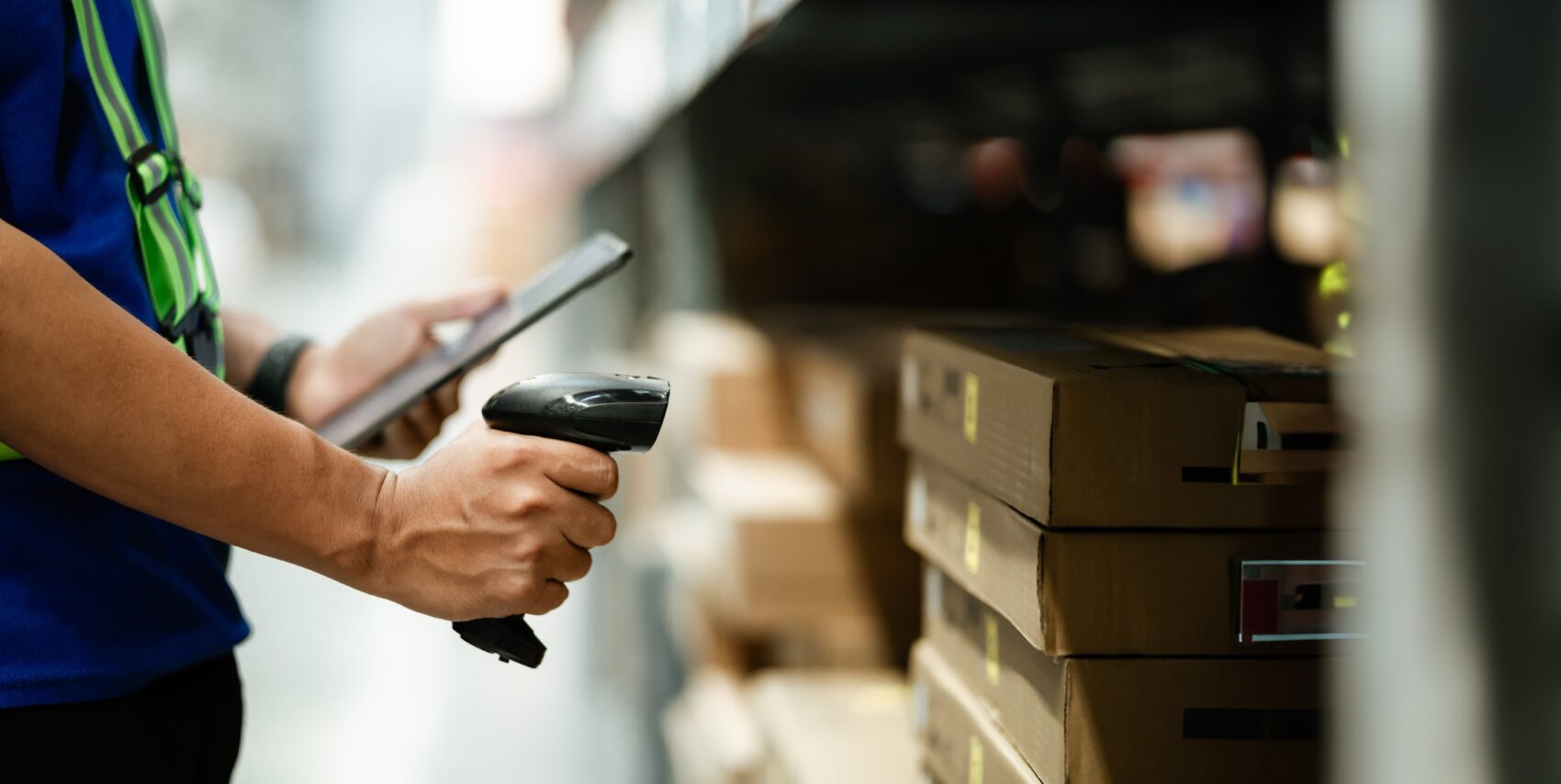
A 2D scanner—sometimes called an imager—uses a digital camera or sensor to capture the entire barcode image, rather than sweeping a single laser line across it as 1D scanners do. This allows the scanner to interpret complex patterns of dots, squares, and lines instantly.
Key Advantages:
- Omnidirectional Reading: 2D scanners can read codes at any orientation, reducing the need for precise alignment.
- Greater Data Capacity: They can decode large amounts of information embedded in compact codes.
- Versatility: A single 2D scanner can read multiple barcode types—QR, Data Matrix, PDF417, etc.—eliminating the need for different devices.
- Durability: Most 2D imagers use solid-state technology with no moving parts, making them more durable and reliable in harsh environments.
- Mobile and Digital Integration: 2D scanners can read codes displayed on screens, such as smartphones or tablets—ideal for mobile ticketing, payments, or authentication.
In industrial settings, 2D scanners have revolutionized how manufacturers track components, validate processes, and maintain compliance. They enable real-time visibility across the supply chain, from raw materials to the end user.
Choosing the Right Scanner
Selecting the right 2D scanner for your application involves evaluating several factors. The best option depends on your environment, label type, and workflow requirements.
- Application Environment
- Retail/Point-of-Sale: Compact handheld imagers with USB or Bluetooth connectivity are ideal for scanning QR codes or digital coupons.
- Warehouse/Logistics: Rugged handheld or fixed-mount scanners with long-range capabilities are necessary for scanning from varying distances.
- Manufacturing/Industrial: Fixed-mount or vision-based scanners designed for high-speed conveyor systems ensure continuous performance.
- Label Material and Marking Method
- Paper Labels: Standard imagers are sufficient.
- Direct Part Marking (DPM): Specialized DPM scanners use high-contrast lighting and algorithms to read etched or laser-marked codes on metal or plastic.
- Flexible Packaging: If the label surface is curved or reflective, select scanners with dynamic focusing and glare suppression.
- Connectivity and Integration
Modern scanners can connect through USB, RS-232, Ethernet, or wireless protocols. Some advanced systems integrate directly into MES or ERP software for seamless data capture and analysis.
- Decoding Speed and Accuracy
Choose a scanner rated for your line speed and required throughput. In automated environments, even milliseconds matter—especially when thousands of items move through the line each hour.
- Future Scalability
Select scanners that support firmware updates and new symbologies. As barcode standards evolve (such as GS1 Digital Link or serialized 2D identifiers), upgradable devices protect long-term investments.
In short, matching the scanner’s capabilities to your operational needs ensures consistent, error-free performance—and maximizes the benefits of your 2D labeling system.
Maximizing 2D Data Potential
The true power of 2D barcodes lies in data utilization. Capturing the code is only step one; how you use that data defines the value of your labeling system.
Here’s how businesses can maximize 2D barcode data for productivity, compliance, and customer engagement.
- Centralized Data Management
Integrate barcode data with a centralized system—such as a Manufacturing Execution System (MES) or Enterprise Resource Planning (ERP) platform—to link production events, inventory movements, and shipment records. This creates a single source of truth for traceability.
- Real-Time Visibility
Connecting scanners to cloud-based dashboards allows real-time monitoring of line performance, defect rates, or serialization compliance. For industries like pharmaceuticals or food production, this transparency is vital.
- Automation and Quality Control
2D barcodes can trigger automated actions—such as machine settings, label verification, or batch changeovers—reducing human error. Vision-based systems can confirm that each label matches its intended product before packaging.
- Anti-Counterfeiting and Authentication
By encoding unique identifiers and linking them to secure databases, brands can protect products from imitation. Consumers can verify authenticity simply by scanning the code with a smartphone.
- Smart Consumer Experiences
Beyond compliance, 2D labels can enhance marketing. A scan might open a promotional webpage, product video, or digital manual. This extends the brand experience beyond the packaging, fostering loyalty and engagement.
- Regulatory Reporting and Sustainability
Data collected via 2D barcodes simplifies regulatory submissions and sustainability tracking. For example, manufacturers can trace carbon footprints, recycling rates, or ethical sourcing credentials directly from serialized batch data.
By viewing 2D coding and marking as a strategic data tool rather than a compliance obligation, organizations can unlock efficiencies across every stage of the value chain.

Conclusion
2D barcodes are far more than modern alternatives to 1D stripes—they are digital gateways linking physical products to rich, actionable data. Understanding the different types of 2D barcodes, from QR and Data Matrix to PDF417 and Aztec, helps businesses choose the best fit for their unique applications.
Whether you’re a manufacturer looking to improve traceability, a logistics provider optimizing speed, or a brand enhancing customer engagement, 2D labeling provides a flexible foundation for growth.
When paired with efficient 2D scanning technologies and intelligent data systems, these codes transform basic data into dynamic assets—driving efficiency, compliance, and transparency across the entire product lifecycle.
Contact REA JET to explore how agile coding and marking can unlock your packaging potential.