
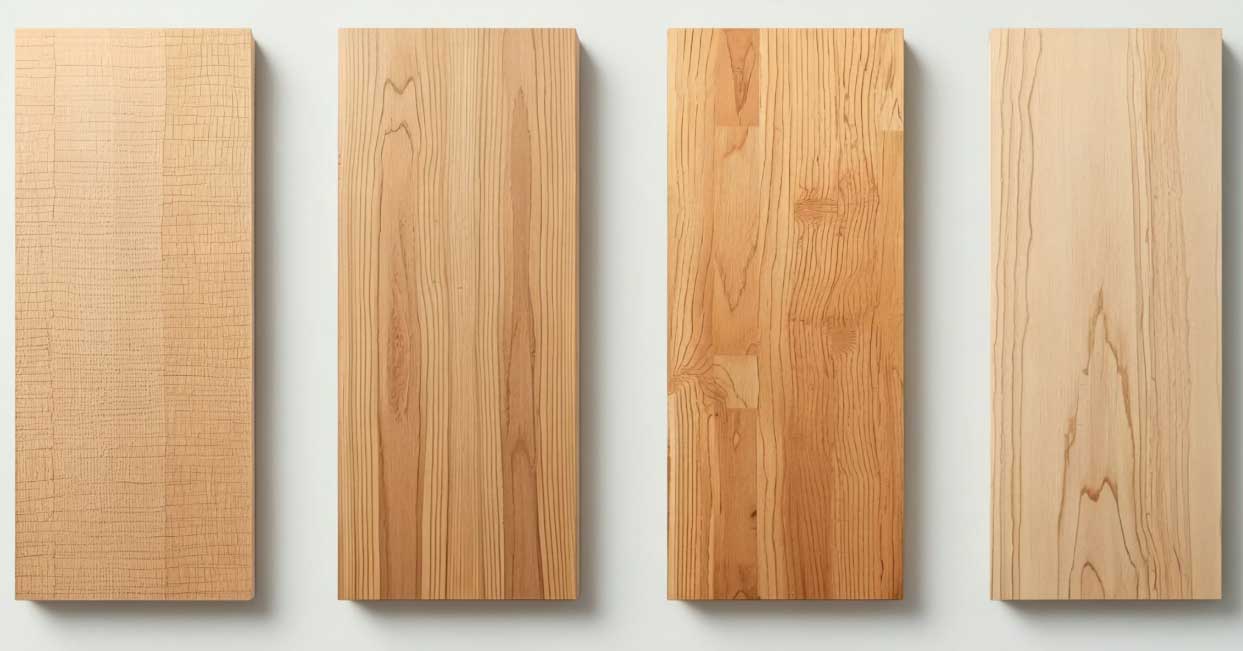
Wood products may look similar as they move through a manufacturing facility, but from a coding and marking perspective, they can behave very differently.
MDF offers a relatively uniform surface. Plywood introduces grain, layers, and surface variations. OSB is coarse and highly textured. Solid wood can vary significantly depending on species, moisture, finish, and processing.
That means there is no single wood panel marking and coding technology that’s ideal for every application.
Selecting the right system requires manufacturers to consider the substrate, information being printed, required print quality, production speed, marking location, operating environment, and how the code will be used downstream.
For manufacturers looking to automate or improve their marking process, this wood marking guide explores the factors that should drive the decision—and how different wood products can influence the technology required.
Why Wood Panel Marking and Coding Matters
Wood manufacturers use marking and coding for many different purposes.
A mark may identify the manufacturer or product. It might communicate a grade, dimension, production date, batch, shift, or internal tracking number. Some applications require branding, while others use codes primarily for production control or traceability.
Regardless of the information, the mark needs to perform reliably within the manufacturing process.
A poorly selected marking system can create unreadable codes, inconsistent placement, excessive maintenance, or unnecessary production interruptions.
The challenge is that wood is not a standardized printing surface.
Successful wood panel marking and coding starts by understanding the material being marked.
Start With the Wood Substrate
The first question shouldn’t be, “Which printer should we buy?”
It should be, “What are we printing on?”
Surface characteristics can have a significant effect on how ink interacts with a wood product. Manufacturers should evaluate texture, porosity, moisture, color, dust, coatings, and other variables before choosing a technology.
The differences become clear when comparing common wood products.
Marking MDF
Medium-density fiberboard, or MDF, typically provides one of the more consistent surfaces for industrial marking.
Because the material is manufactured from wood fibers and resin into a relatively uniform panel, its surface tends to be smoother and more predictable than natural lumber or OSB.
That consistency can make MDF well suited for applications requiring clean text, identification codes, logos, or other production information.
However, the specific MDF surface still matters. Raw MDF and coated or laminated MDF can behave differently, so the actual material should be tested before specifying the final system and ink.
For manufacturers running multiple MDF products, digital inkjet technology can also make it easier to change messages as product specifications change.
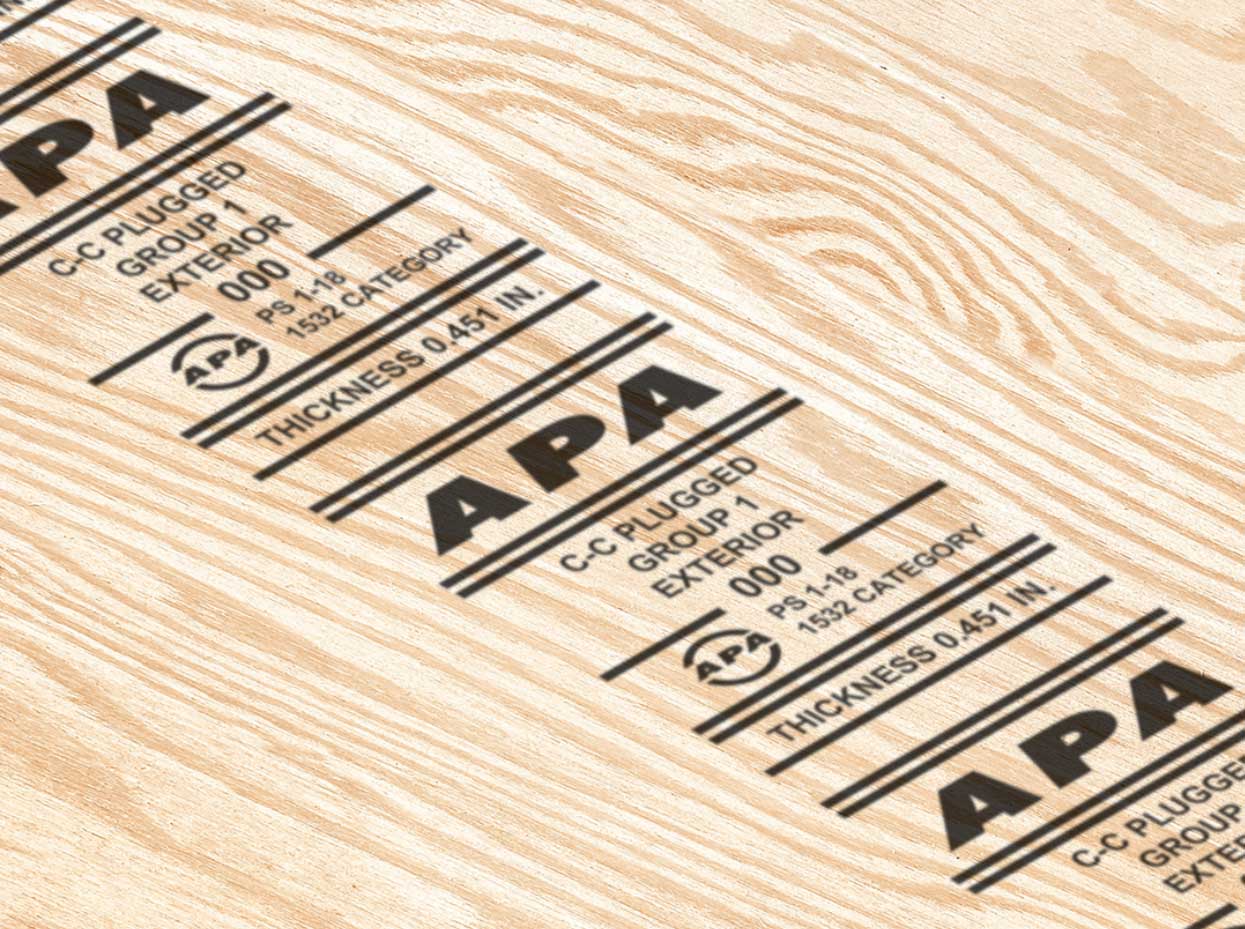
Marking Plywood
Plywood introduces additional variables.
The visible surface is natural wood veneer, which means grain, color, knots, and other characteristics can affect the appearance of a printed mark.
Manufacturers also need to consider whether they are printing on the face, back, or edge of the panel.
A mark that performs well on a relatively smooth plywood face may behave differently when printed on an exposed layered edge.
The required print quality should therefore be considered in context. If the application requires basic identification, a rugged industrial marking method may be sufficient. If it requires smaller characters, detailed logos, or machine-readable information, print quality becomes more important.
Application testing helps determine the right combination of ink, resolution, printhead position, and marking technology.
Marking OSB
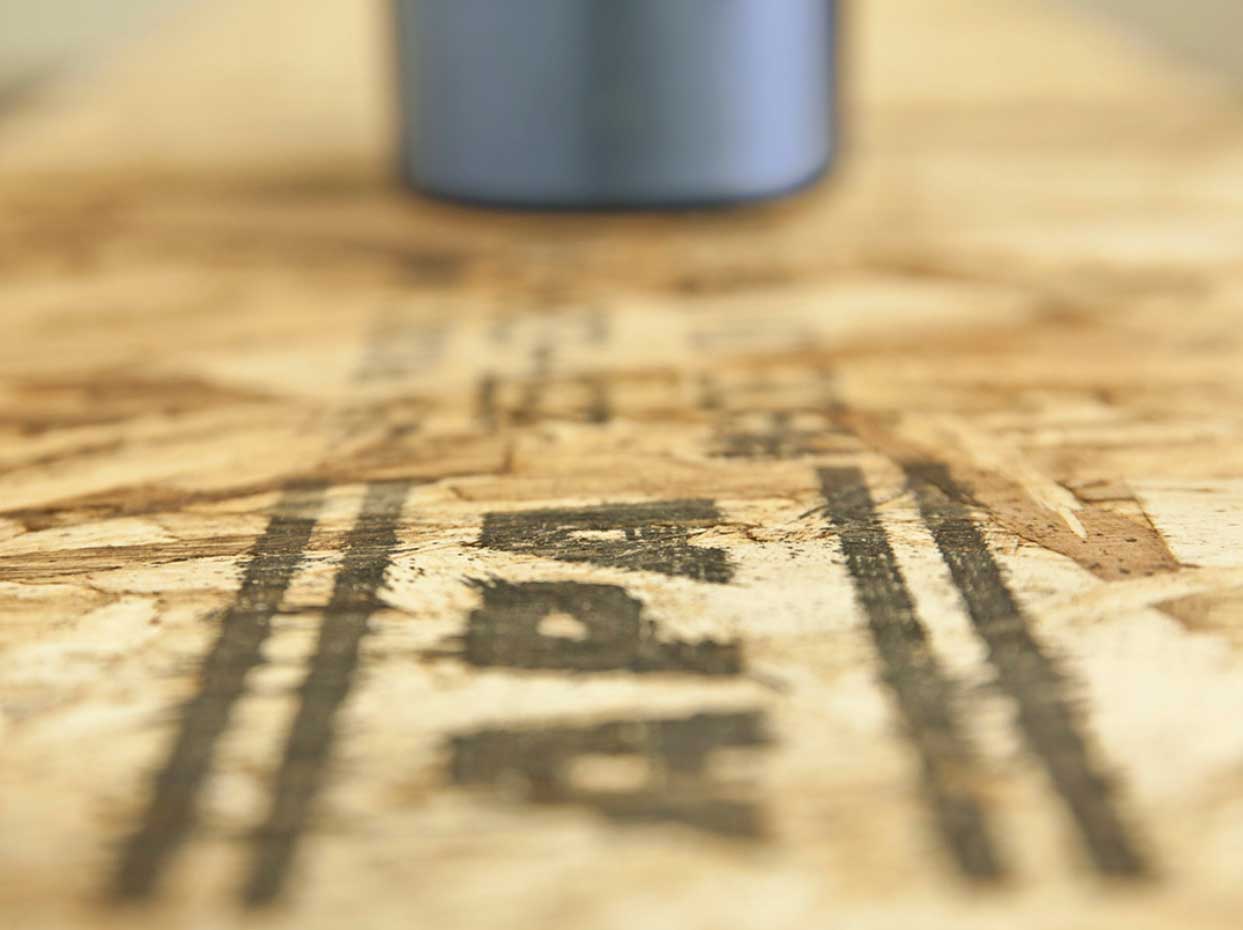
Oriented strand board presents one of the more challenging surfaces in wood panel marking and coding.
OSB is intentionally textured. Large wood strands create an irregular surface with substantial variation across the panel.
For a marking system, that creates several challenges.
The distance between the printhead and the actual substrate surface may vary. Ink may land on different surface levels. Fine details can become difficult to reproduce consistently.
For these reasons, manufacturers should avoid assuming that the highest-resolution printer is automatically the best choice.
In some OSB applications, a larger, bolder mark designed to remain readable across an irregular surface can be more effective than a highly detailed code.
The printer needs to match the substrate—not the other way around.
Marking Solid Wood
Solid wood introduces natural variability.
Species, grain, moisture content, roughness, saw marks, finishing, and processing can all influence the appearance of a printed mark.
Rough-sawn lumber can require a very different approach from planed or finished wood.
Manufacturers should also consider product movement. Boards may not always travel through a line with perfectly consistent orientation or distance from the printhead.
A robust wood panel marking and coding system needs to account for these real production conditions.
Determine What Information Needs to Be Marked
Once the substrate is understood, the next step is defining the mark itself.
Common wood-product markings can include:
- Product or panel identification
- Grade information
- Dimensions
- Production dates
- Batch or lot numbers
- Shift information
- Manufacturing location
- Logos and branding
- Internal tracking codes
- Barcodes or other machine-readable identifiers
The complexity of the message helps determine the appropriate printing technology.
Large text requires different capabilities than a small, detailed code. A static logo presents different requirements than variable production data.
Manufacturers should define both today’s marking requirements and information they may need to print in the future.
Evaluate Print Resolution Requirements
Print quality is important, but “better” doesn’t always mean “higher resolution.”
The appropriate resolution depends on the application.
Large-character industrial marking can be ideal when the primary objective is creating highly visible text or identifiers on rough surfaces. Higher-resolution technology may be better suited to applications requiring smaller text, detailed graphics, or certain machine-readable codes.
This distinction is particularly important with wood.
Printing an extremely detailed image onto a rough OSB surface may offer little practical advantage if the substrate itself prevents that detail from remaining readable.
A good wood marking guide should therefore emphasize application-appropriate print quality rather than resolution specifications alone.
Consider Printhead-to-Product Distance
Distance can be an overlooked factor in wood marking applications.
On a perfectly controlled packaging line, products may pass a printer at nearly identical positions every time. Wood manufacturing can be less predictable.
Warping, panel variation, rough surfaces, and product movement can change the distance between the printhead and substrate.
Some industrial inkjet technologies are more tolerant of variable throw distances than others.
For rough or inconsistent products, that capability can be particularly valuable.
Manufacturers should evaluate the actual production line rather than assuming every panel will arrive at the marking station in precisely the same position.
Match the Marking Technology to Production Speed
A coding system has to keep up with production.
Before selecting equipment, manufacturers should document actual line speeds, product spacing, maximum throughput, and the time available to produce each mark.
Average production speed isn’t enough.
The system needs to perform during peak operating conditions.
Inkjet technology can provide an advantage because printing is non-contact. Panels or boards can continue moving while the mark is applied, helping manufacturers automate coding without adding a separate manual process.
Sensors and production controls can trigger the printer as each product enters the marking position.
Choose the Right Ink for the Application
The printer and ink should be treated as a system.
Ink selection can affect contrast, drying, adhesion, durability, and overall readability.
A suitable ink for raw MDF may not necessarily be the best choice for another surface.
Manufacturers should consider the natural color of the wood as well. The mark needs sufficient contrast to remain visible against the substrate.
Downstream handling also matters.
Will panels be stacked immediately? Will the surface encounter abrasion? Will the product be stored indoors or exposed to other environmental conditions?
Testing should reflect these real-world requirements.
Consider Large-Character Inkjet Printing
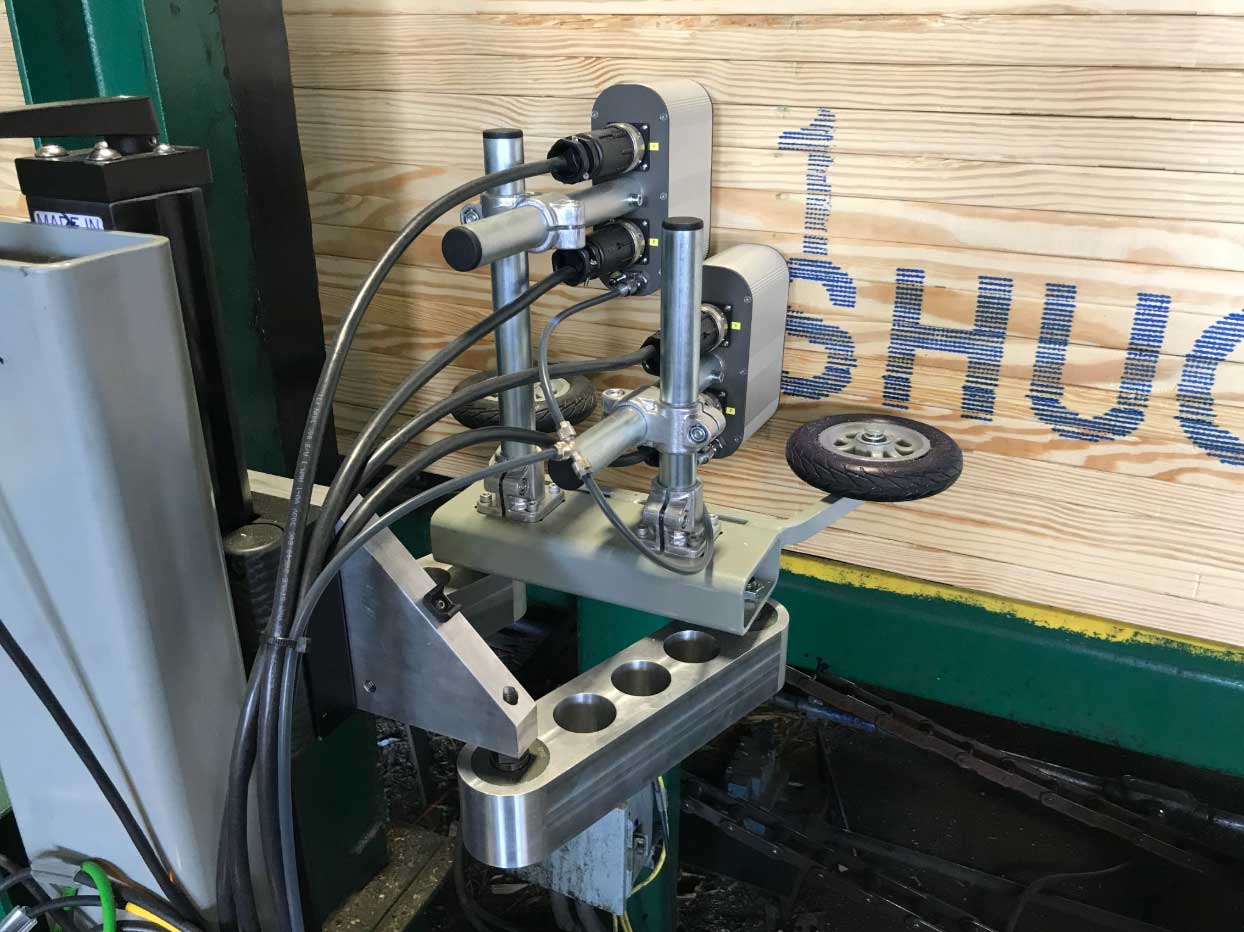
Large-character inkjet technology can be particularly useful for wood products requiring bold, highly visible identification.
These systems can be appropriate for printing information such as product descriptions, dimensions, grades, production information, or company identification.
For demanding building-material applications, ruggedness and tolerance for variations in print distance can be particularly important.
REA JET’s DOD large-character technology, for example, is designed for industrial applications where robust equipment and flexible print distances can provide advantages on challenging substrates.
This type of system can be a strong fit for applications where durability and readability are more important than producing extremely fine graphics.
Consider High-Resolution Inkjet Printing
Some wood-product applications require more detailed printing.
High-resolution inkjet technology can support sharper text, graphics, logos, and other information when the substrate and production environment allow it.
It can be particularly effective on smoother wood panels where surface consistency allows the additional print resolution to be utilized.
The key is matching the technology to the application.
High resolution on a smooth MDF panel may deliver excellent results. The same approach on highly textured OSB may not produce the same benefit.
Testing the actual substrate remains essential.
Integrate Marking With Production Data
Modern wood panel marking and coding can go beyond printing a fixed message.
When coding equipment is integrated with production controls, the information printed on a product can change automatically based on manufacturing data.
For example, the system could receive information related to product type, dimensions, production run, or other variables and incorporate it into the appropriate print message.
This reduces reliance on manual message changes and can help decrease the risk of coding errors.
Integration can also support broader traceability initiatives by creating a stronger connection between the physical product and production data.
Account for the Manufacturing Environment
Wood-processing facilities can be challenging environments for electronics and precision equipment.
Sawdust, airborne particles, vibration, temperature changes, and continuous operation should all factor into system selection and installation.
Printer placement and protection are important.
At the same time, equipment should remain accessible for routine operation and maintenance.
A successful lumber marking solution isn’t simply a printer mounted near a conveyor. The entire installation should be engineered for the production environment in which it will operate.
Test the Actual Material
One of the most important recommendations in any wood marking guide is simple: test before selecting the final system.
Send actual MDF, plywood, OSB, or solid wood samples for application testing whenever possible.
Tests should reproduce the required:
- Print content
- Character size
- Line speed
- Print orientation
- Ink
- Print distance
- Substrate condition
Manufacturers can then evaluate readability, contrast, consistency, and overall mark quality before committing to an installation.
Testing is especially valuable when a facility produces multiple wood products. A solution needs to perform across the intended range of materials—not simply on the easiest substrate.
Selecting the Right Wood Panel Marking and Coding System
Choosing the right technology ultimately comes down to matching the marking system to the production application.
For MDF, a relatively uniform surface may allow detailed, high-quality printing.
For plywood, manufacturers need to account for grain, veneer characteristics, and whether the face or edge is being marked.
For OSB, rough and irregular surfaces may favor bold, durable marking technologies capable of handling challenging print distances.
For solid wood, species, moisture, texture, and processing all need to be evaluated.
There is no universal answer.
That’s precisely why the best approach starts with the substrate and application instead of the printer.
Find the Right Wood Marking Solution with REA JET
Effective wood panel marking and coding requires more than putting ink on wood. The system must deliver the required mark consistently while operating at production speed in a demanding manufacturing environment.
REA JET offers industrial coding and marking technologies that can be configured for a wide range of wood and building-material applications, from large-character identification to higher-resolution printing.
The right solution starts by evaluating the actual MDF, plywood, OSB, or solid wood product, along with production speed, marking requirements, print distance, operating environment, and integration needs.
By testing the application and selecting technology around those requirements, manufacturers can build a marking process that improves consistency, supports automation, and keeps pace with production.
In wood manufacturing, the question isn’t simply which printer produces the best mark.
It’s which wood panel marking and coding system produces the right mark—on your product, on your line, under your operating conditions.
Contact REA JET to explore how reliable coding and marking can unlock your lumber marking potential.
 Or call 440-232-0555
Featured Coding & Marking Technologies View all
Most-requested coding & marking systems.
- 01 Large Character Inkjet Printers (DOD) Direct-to-product marking for cases, pallets, lumber, building materials and other porous surfaces
- 02 High-Resolution Inkjet Printers Print sharp text, logos, barcodes and 2D codes directly on products and packaging
- 03 Laser Systems Permanent, maintenance-free marking for traceability, compliance and product identification
- 04 Barcode Verification Systems Verify barcode quality and readability to meet retailer, GS1 and customer requirements
- 05 Small Character Inkjet Print date, lot, batch and traceability codes for production lines and packaging
- 06 Spray Mark Technology Reliable product identification and defect marking for manufacturing and industrial processes