In lumber manufacturing, a mark is more than a mark. Grade stamps, production information, traceability codes, and other identifiers need to be applied accurately and consistently—often while lumber is moving through a demanding, high-volume production environment.
Traditional marking methods can struggle to keep pace with the speed and automation of modern mills. That’s why manufacturers are increasingly turning to advanced industrial lumber marking technology to improve print consistency, increase productivity, and reduce the manual processes associated with conventional stamping.
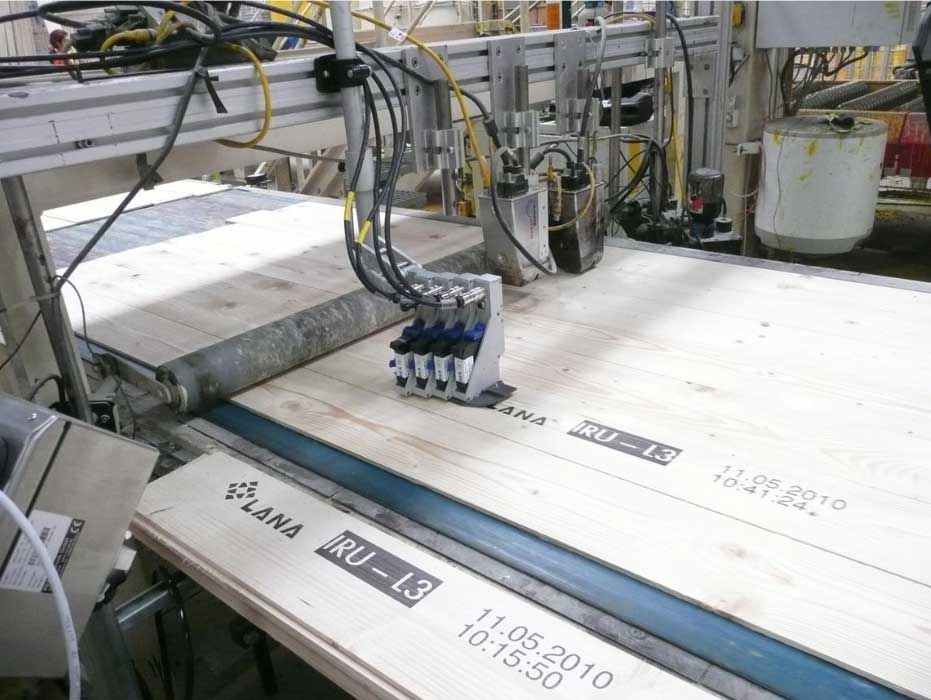
Ink jet technology provides a non-contact method for applying clear, repeatable information directly on wood products. A modern lumber grade markingsolution can be integrated into existing production lines and configured to print variable information without the physical contact required by traditional, outdated stamping equipment.
For lumber producers focused on efficiency, traceability, and reliable marking, the right technology can transform what was once a basic production step into an integrated part of the manufacturing process.
Why Industrial Lumber Marking Matters
Lumber manufacturers operate in an environment where speed and consistency matter. Products move quickly through sawmills, processing facilities, grading operations, and distribution networks. Throughout that process, individual pieces or bundles may need markings that communicate important information.
Depending on the application and applicable requirements, those markings can include grade information, mill identification, product specifications, production data, logos, or other tracking information.
An effective industrial lumber marking process therefore needs to accomplish several things simultaneously.
Marks must be readable. They need to be applied in the correct location. The marking process needs to keep pace with production. And the equipment needs to perform reliably in an industrial environment.
When marking becomes inconsistent, manufacturers can face unnecessary rework, downtime, wasted product, and operational inefficiencies.
Advanced ink jet technology helps address those challenges by making marking a more automated and controllable process.
Moving Beyond Traditional Lumber Grade Stamping
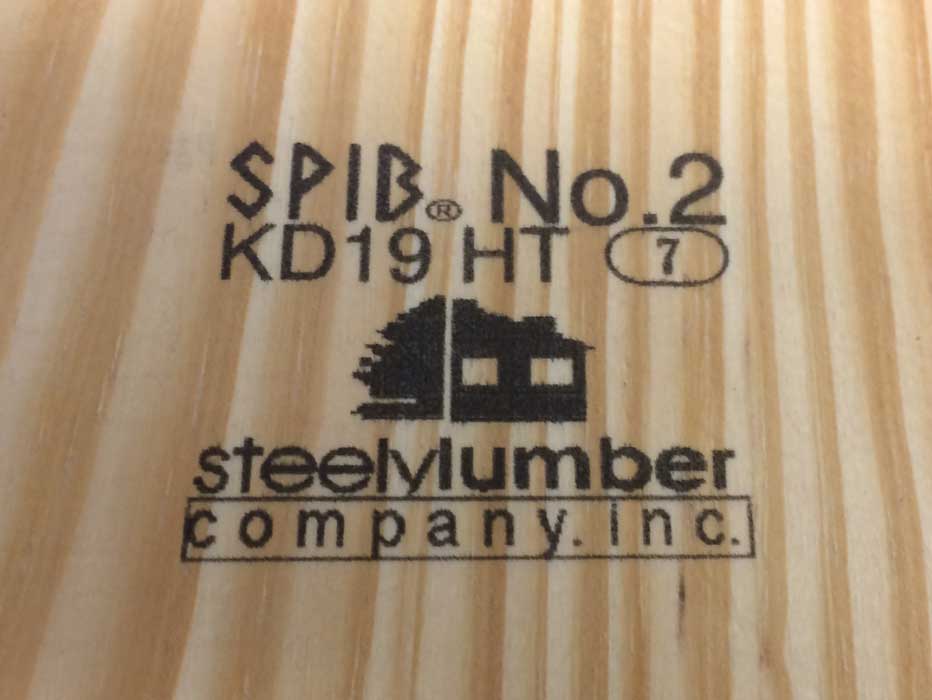
Traditional contact stamping has long played an important role in lumber production. However, physical stamping introduces limitations that can become more noticeable as mills increase automation and throughput.
Contact systems depend on the marking device physically interacting with the lumber. Variations in product position, surface characteristics, equipment setup, and stamp condition can affect the finished mark.
Ink jet technology takes a different approach.
A lumber grade marking system prints without physically contacting the wood. Printheads apply ink as lumber passes through the marking area, allowing information to be produced quickly and consistently.
This can provide several operational advantages, including less mechanical contact with the product, greater flexibility in the information being printed, and easier integration into automated production processes.
The result is a lumber marking process designed to complement the speed and control of modern manufacturing.
Greater Precision and Consistency
One of the primary advantages of modern industrial lumber marking is improved control over the finished mark.
In a production environment, consistency is essential. A system that produces a clear mark on one board but a weak or poorly positioned mark on the next creates problems downstream.
Ink jet systems allow manufacturers to control print parameters electronically. Depending on the system and application, operators can manage factors such as print content, positioning, and other production variables.
That level of control helps make the marking process more repeatable.
It can be especially valuable in operations running multiple product types or configurations. Rather than relying entirely on physical changes to traditional marking equipment, digital systems can provide greater flexibility when production requirements change.
Increased Production Efficiency
Every process on a lumber line has the potential to affect throughput.
If marking requires frequent adjustment, maintenance, or manual intervention, it can become a production bottleneck. A well-designed lumber marking and coding system should work with the line rather than slow it down.
Ink jet printing is particularly suited to automated manufacturing because it is a non-contact process. Lumber can continue moving through the production environment while information is applied.
Automation also reduces dependence on repetitive manual marking activities. Operators can focus on monitoring the overall production process instead of continually handling individual marking tasks.
For high-volume mills, even relatively small improvements in uptime and production flow can become significant when multiplied across thousands of pieces of lumber.
Flexible Printing for Changing Production Requirements
Modern lumber operations don’t necessarily produce the same product all day.
A mill may process different grades, dimensions, product lines, or customer requirements during a production schedule. Each change can create a corresponding change in marking requirements.
This is where digital lumber marking and coding technology provides an important advantage.
Electronic control allows print information to be changed without relying solely on the physical replacement of stamps or marking plates. Depending on the equipment configuration, manufacturers can create and manage multiple print formats for different production requirements.
This flexibility can support:
- Grade and product identification
- Mill information
- Production information
- Logos and branding
- Variable codes
- Other manufacturing or tracking data
For operations with frequent product changeovers, simplifying the marking process can help reduce setup time and the potential for operator error.
Supporting Lumber Traceability
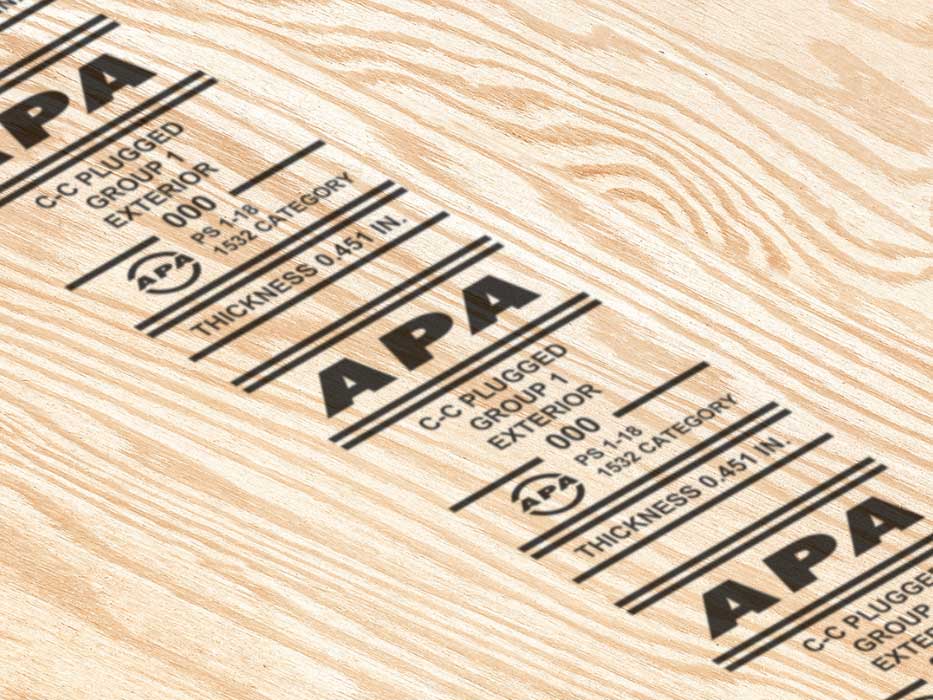
Traceability has become increasingly important throughout manufacturing and distribution.
For lumber producers, identifying where and when a product was processed can provide valuable information for internal quality management, inventory control, and downstream operations.
An advanced lumber marking and coding system can support this objective by incorporating variable production information into the marking process.
Instead of treating marking as an isolated task, manufacturers can connect coding more closely with production data. This creates opportunities to associate physical products with information generated during manufacturing.
The specific level of traceability depends on the operation, software, coding system, and data infrastructure. But the underlying principle is increasingly important: the mark on the product can become a link to useful production information.
Marking Challenging Wood Surfaces
Wood presents challenges that are different from those encountered when printing on a smooth carton or manufactured plastic container.
Lumber surfaces can vary in texture, moisture, color, grain, and consistency. Production environments may also involve sawdust and other conditions that need to be considered when specifying equipment and inks.
For this reason, successful industrial lumber marking isn’t simply a matter of placing a generic printer next to a conveyor.
The printer, ink, printhead configuration, mounting, distance from the substrate, line speed, and production environment all need to be evaluated as part of the application.
Testing the actual lumber substrate is particularly important. A coding solution that works well for one wood product or production environment may need a different configuration for another.
The goal is not simply to print—it is to create a readable, repeatable mark under real production conditions.
Reducing Maintenance and Manual Intervention
Production uptime is one of the most important considerations when evaluating any piece of industrial equipment.
Traditional contact marking equipment contains components that experience physical interaction with the product. Over time, those components may require adjustment, cleaning, replacement, or other maintenance.
Because ink jet is non-contact, it eliminates some of the mechanical interaction associated with conventional stamping.
That doesn’t mean ink jet systems are maintenance-free. Printheads, ink delivery components, and other system elements still require proper care. But the maintenance profile is different, and the reduction in physical contact can provide meaningful advantages in the right application.
Selecting equipment designed for industrial environments—and having access to knowledgeable service and technical support—is therefore just as important as selecting the printing technology itself.
Improving Branding and Product Presentation
Not every lumber mark is purely functional.
Manufacturers may also want to identify their company, distinguish a product line, or create more professional and consistent branding on wood products.
Digital lumber marking and coding technology can provide more flexibility than traditional methods when a manufacturer needs to incorporate logos, text, or other graphics.
Consistent branding can be particularly valuable for lumber that remains visible throughout distribution or reaches contractors, builders, retailers, and other customers.
A clean, professional mark reinforces the manufacturer’s identity while communicating necessary product information.
Integrating Ink Jet Technology Into the Production Line
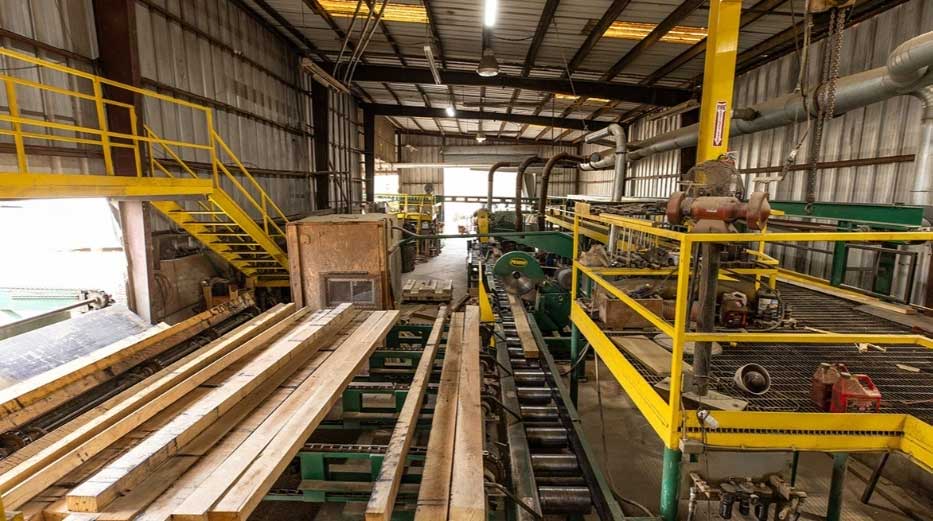
The performance of a coding system depends heavily on integration.
The printer needs to know when the lumber is in position, what information should be printed, and where the mark belongs. Production speeds, product spacing, sensors, controls, and mounting all influence the final result.
A properly configured lumber grade stamp ink jet installation may include product detection, line controls, printheads, ink delivery equipment, and software or operator interfaces.
The objective is to make printing part of the production process rather than an independent operation.
Before selecting a system, manufacturers should evaluate several questions:
- What information needs to be printed?
- What lumber surfaces will be marked?
- How fast is the production line?
- How large must the mark be?
- Does information change between products?
- What environmental conditions will the equipment encounter?
- How will the system interface with existing equipment?
- What level of technical support will be required?
Answering these questions early can help manufacturers avoid choosing equipment based only on printer specifications rather than the complete application.
Choosing the Right Industrial Lumber Marking Solution
There is no universal marking technology that’s right for every lumber operation.
The best solution depends on the production environment, desired print quality, line speed, code requirements, substrate, automation level, and long-term operational goals.
Manufacturers should look beyond the initial equipment purchase and consider the complete cost of ownership. Ink consumption, maintenance requirements, operator involvement, downtime, integration, replacement components, and technical support can all affect the true cost of a system.
Support is particularly important in industrial applications. When coding equipment is integrated into a production line, a printer problem can become a production problem.
Working with a coding and marking partner that understands industrial applications can help manufacturers properly test the application, select the appropriate technology, integrate the equipment, and maintain performance over time.
The Future of Lumber Marking and Coding Technology
Automation is continuing to reshape lumber processing, and marking technology is evolving along with it.
The future of industrial lumber marking will increasingly involve connected equipment, automated data management, improved production monitoring, and tighter integration between coding systems and manufacturing controls.
Instead of simply reproducing a static stamp, future-ready marking systems can become part of the mill’s broader information infrastructure.
That can mean automatically changing print information based on production data, monitoring printer status from centralized systems, improving traceability, and reducing manual setup.
As lumber manufacturers continue investing in automation, the ability of coding equipment to communicate with other production systems will become increasingly valuable.
Unlocking Better Lumber Marking with REA JET
Modern lumber production requires marking technology capable of keeping pace with demanding industrial operations.
Advanced industrial lumber marking provides manufacturers with an opportunity to improve print consistency, automate repetitive processes, support traceability, and create a more flexible approach to product identification.
A properly specified lumber grade stamp ink jet system can replace or complement traditional marking processes while providing the flexibility needed for today’s automated production environments.
REA JET specializes in industrial coding and marking technologies engineered for demanding manufacturing applications. By evaluating the substrate, production line, required mark, and operating environment together, manufacturers can develop a lumber marking and coding system designed around the realities of their operation—not simply the capabilities of a printer.
As lumber manufacturing becomes increasingly automated, the right lumber marking and coding technology can help turn a necessary production step into a more precise, efficient, and integrated process.
Contact REA JET to explore how reliable coding and marking can unlock your lumber marking potential.
 Or call 440-232-0555
Featured Coding & Marking Technologies View all
Most-requested coding & marking systems.
- 01 Large Character Inkjet Printers (DOD) Direct-to-product marking for cases, pallets, lumber, building materials and other porous surfaces
- 02 High-Resolution Inkjet Printers Print sharp text, logos, barcodes and 2D codes directly on products and packaging
- 03 Laser Systems Permanent, maintenance-free marking for traceability, compliance and product identification
- 04 Barcode Verification Systems Verify barcode quality and readability to meet retailer, GS1 and customer requirements
- 05 Small Character Inkjet Print date, lot, batch and traceability codes for production lines and packaging
- 06 Spray Mark Technology Reliable product identification and defect marking for manufacturing and industrial processes