
A code printed on a piece of lumber, brick, panel, or other construction material can do much more than identify the product.
When marking is connected to production data, that code can help manufacturers determine when a product was made, where it was produced, which production line handled it, what batch it belonged to, and potentially other information relevant to quality control and distribution.
That’s why building materials marking and coding is increasingly important to modern manufacturing.
As building-material manufacturers automate production and generate more data, the physical product needs a reliable connection to that information. Industrial coding systems can provide that link by placing human-readable or machine-readable identifiers directly onto products, packaging, or bundles.
The question then becomes: what should you actually print?
There is no universal answer. The right information depends on the material, application, customer requirements, production process, and applicable standards. But understanding the available options can help manufacturers develop a more useful approach to traceability.
Why Building Materials Traceability Matters
Building materials can pass through multiple stages before reaching their final destination.
A product may move from manufacturing to a warehouse, distributor, building-supply company, contractor, and eventually a construction site. Depending on the product, materials from a single production run may also be distributed across many locations.
Traceability creates a record that helps connect the physical material to its production history.
For manufacturers, that can support several objectives:
- Quality control
- Inventory management
- Production troubleshooting
- Customer service
- Product identification
- Distribution visibility
- Internal process improvement
- Targeted investigation when quality issues arise
Effective building materials marking and coding makes critical information available on or associated with the product rather than relying entirely on packaging or paperwork that may become separated from it.
Start With a Unique Product or Production Identifier
One of the most useful pieces of information manufacturers can print is an identifier that connects the product to a production record.
The identifier might represent a batch, lot, production run, or another internally defined unit.
The key is consistency.
If a problem is identified later, the manufacturer should be able to use the printed information to locate relevant production records.
A code doesn’t necessarily need to contain every piece of manufacturing information itself. In many cases, a relatively short identifier can serve as the key to a much larger digital record.
That approach can keep the physical mark manageable while still supporting detailed traceability.
Print Production Date and Time When Useful
Date information can provide immediate context.
Printing the production date allows employees, distributors, or other authorized users to quickly determine when a product was manufactured.
For operations requiring more detailed tracking, the time or production shift may also be valuable.
This can help manufacturers narrow an investigation from an entire day of production to a specific operating period.
For example, if a quality issue occurred only during one shift, production information printed on the affected materials can help identify which products may require additional review.
The level of detail should match the manufacturer’s actual traceability requirements. Printing information simply because the system can generate it adds little value unless that information supports a defined business or operational need.
Include Plant and Production Line Identification
Manufacturers operating multiple facilities may benefit from identifying the plant where a product was manufactured.
Within larger facilities, line or machine identification can provide another level of detail.
A simple code might represent:
Plant → Line → Date → Shift → Batch
That combination can provide a useful starting point for investigating production issues.
When building materials marking and coding is integrated with production systems, much of this information can be generated automatically rather than entered manually by operators.
Automation can improve consistency while reducing the possibility of incorrect data being applied to the product.
What Should Be Printed on Lumber?
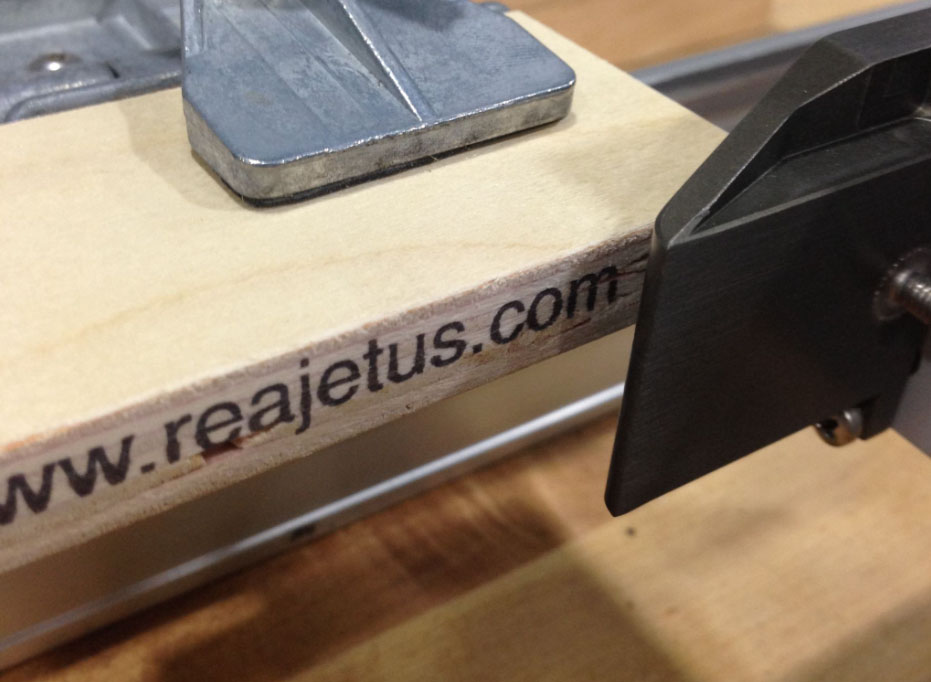
Lumber marking has several potential purposes, including product identification, grading, manufacturing information, branding, and internal traceability.
Depending on the product and applicable requirements, lumber markings may include information such as:
- Grade information
- Mill identification
- Product or species information
- Production date
- Batch or run number
- Dimensions
- Shift or line identifier
- Internal tracking information
- Manufacturer logo or brand
Not every lumber product requires all of this information, and formal grade markings may be governed by applicable grading rules and certification requirements.
Manufacturers should distinguish between required grade information and additional production data they choose to print for internal traceability.
Industrial inkjet technology can provide an advantage because variable information can be changed electronically as production changes.
Instead of using the same static mark throughout production, manufacturers can potentially connect the printer to line data and automatically update production identifiers.
What Should Be Printed on Bricks?
Brick and masonry manufacturing creates a different marking environment.
Products can be abrasive, dusty, uneven, and exposed to demanding manufacturing conditions. Depending on where in the process the mark is applied, the marking system may also encounter significant temperature or handling considerations.
Useful information can include:
- Manufacturer identification
- Product type
- Batch or lot number
- Production date
- Plant identification
- Line or press information
- Shift
- Internal quality-control codes
The mark needs to remain readable for as long as the application requires.
For some operations, the purpose may be internal manufacturing traceability. In others, the identifier may need to remain with the product through distribution.
That distinction affects where the code should be placed and what building materials marking and coding technology is appropriate.
What Should Be Printed on Wood and Engineered Panels?
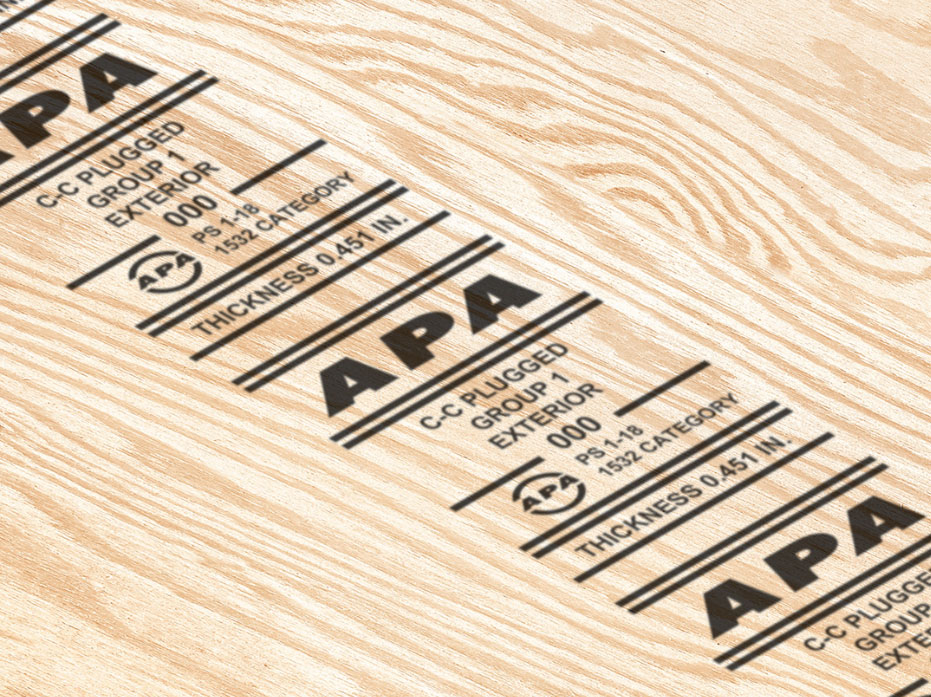
MDF, plywood, OSB, particleboard, and other engineered panels often provide more available surface area for marking than individual pieces of lumber or masonry products.
That creates opportunities to print more detailed information.
Depending on the product, manufacturers may consider:
- Manufacturer and facility
- Product name or type
- Panel dimensions
- Grade or specification
- Production date
- Shift
- Line number
- Batch or lot identifier
- Product code
- Certification or standards information when applicable
- Internal traceability data
- Barcodes or 2D codes
Surface characteristics need to be considered carefully.
Smooth MDF and rough OSB, for example, present very different printing conditions. A highly detailed mark that works well on one substrate may not remain readable on another.
The code should be designed around the material rather than simply transferring the same print format across every product.
Human-Readable Information vs. Machine-Readable Codes
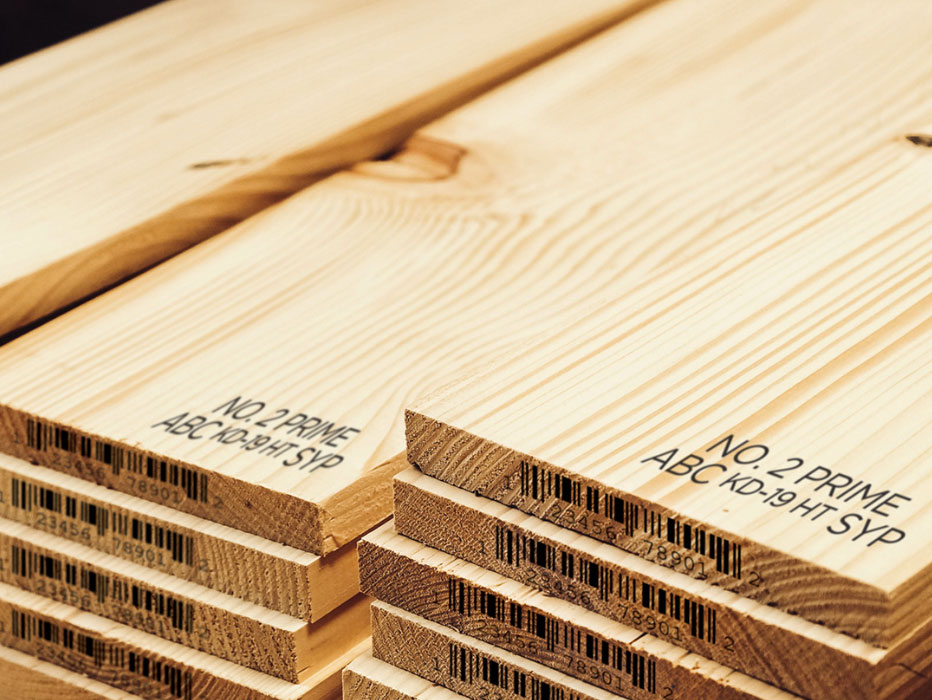
Not every piece of traceability information needs to be written out as text.
Manufacturers can combine human-readable information with machine-readable identifiers.
Human-readable text is useful when operators, customers, or inspectors need immediate access to basic information without a scanner.
Machine-readable codes can connect the physical product to more detailed digital information.
Depending on the application, these may include linear barcodes, 2D codes, or other identifiers.
For example, a panel might display a production date and product description in text while a machine-readable code provides access to a more detailed production record.
This combination can make building materials marking and coding useful to both people and automated systems.
Should You Use a 2D Code?
2D codes can store or reference more information than a basic printed identifier and can be useful in applications where manufacturers want to connect products with digital records.
Potential uses include:
- Production history
- Batch information
- Product specifications
- Installation information
- Quality records
- Digital documentation
- Inventory systems
However, not every building material is an ideal surface for a machine-readable code.
A code printed on smooth packaging is very different from one printed on rough lumber, OSB, or brick.
Code size, resolution, contrast, surface variation, scanner technology, and printing method all affect readability.
If machine scanning is required, manufacturers should validate the entire process—not simply confirm that the printer can reproduce the code.
Think About Code Placement
What you print is only half the equation.
Where you print it can be equally important.
A code may be perfectly readable when it leaves the printer but become useless if it is hidden during stacking, cut away during processing, damaged during handling, or placed where downstream users can’t find it.
Manufacturers should consider the entire product journey.
Where will the material be stacked?
Will it be cut?
Which surfaces remain visible?
Will packaging be removed?
Who needs to read the mark?
Does an automated scanner need a predictable code location?
Thinking through these questions can significantly improve the usefulness of a traceability program.
Match the Marking Technology to the Material
Different building materials require different marking approaches.
Large-character industrial inkjet can be particularly useful when bold, highly visible identification is required on rough or variable substrates.
Higher-resolution inkjet can be appropriate when manufacturers need smaller text, graphics, or machine-readable codes on suitable surfaces.
Laser marking may be another option for compatible materials and applications where altering the substrate produces the desired mark.
The correct technology depends on factors including:
- Surface texture
- Porosity
- Product color
- Required contrast
- Mark size
- Print resolution
- Production speed
- Print distance
- Environmental conditions
- Required durability
The best system is the one engineered around the actual production application.
Connect the Printer to Production Data
The biggest opportunity in modern building materials marking and coding isn’t simply better printing.
It’s better data.
When a printer operates as an isolated machine, operators may need to manually select or enter information. That introduces additional steps and creates opportunities for error.
When marking equipment is integrated with production controls, information can potentially be sent directly to the printer based on what is being manufactured.
A production system might automatically provide a product number, date, batch, line, or other variable data.
The marking system then applies that information to the correct product.
This creates a more direct relationship between the digital manufacturing record and the physical material.
Build a Traceability Strategy Before Designing the Code
It can be tempting to start with a list of everything that could possibly be printed.
A better approach is to work backward from the information the business actually needs.
Ask:
What would we need to know if a quality problem occurred?
How precisely do we need to identify affected production?
Who needs to read the mark?
At what point in the supply chain?
Does the information need to be human-readable?
Does it need to be machine-readable?
How long must the mark remain readable?
What database or production system will contain the underlying records?
Those answers determine what information belongs on the material.
The goal isn’t to print more data. It’s to print the right data.
Building Better Traceability with REA JET
Building-material manufacturers operate some of the most demanding production environments for industrial coding equipment.
Lumber can be rough and inconsistent. OSB is highly textured. Brick can be abrasive and dusty. Panels can move quickly through automated lines while production information changes from one run to the next.
Effective building materials marking and coding requires technology that accounts for those realities.
REA JET offers industrial coding and marking technologies for a wide range of building-material applications, including large-character inkjet, higher-resolution printing, and other marking solutions.
More importantly, the right system can be designed around the complete application: the material, required information, production speed, operating environment, print location, data source, and downstream traceability requirements.
The future of building-material traceability isn’t about putting as much information as possible on every product.
It’s about creating a reliable connection between the physical material and the information behind it.
When the right data is printed clearly, consistently, and at the right point in production, building materials marking and coding becomes more than product identification.
It becomes part of the manufacturing intelligence that follows the product beyond the production line.
Contact REA JET to learn how industrial coding systems, application testing, specialized inks, software integration, and code verification solutions can help identify the right marking approach for your CPG packaging substrates.
 Or call 440-232-0555
Featured Coding & Marking Technologies View all
Most-requested coding & marking systems.
- 01 Large Character Inkjet Printers (DOD) Direct-to-product marking for cases, pallets, lumber, building materials and other porous surfaces
- 02 High-Resolution Inkjet Printers Print sharp text, logos, barcodes and 2D codes directly on products and packaging
- 03 Laser Systems Permanent, maintenance-free marking for traceability, compliance and product identification
- 04 Barcode Verification Systems Verify barcode quality and readability to meet retailer, GS1 and customer requirements
- 05 Small Character Inkjet Print date, lot, batch and traceability codes for production lines and packaging
- 06 Spray Mark Technology Reliable product identification and defect marking for manufacturing and industrial processes