Patient safety, regulatory compliance, and supply chain security have become top priorities across the pharmaceutical and medical device industries. As global supply chains grow increasingly complex and counterfeit products continue to pose significant risks, manufacturers, distributors, and healthcare providers must implement robust systems that enable complete product visibility.
This is where pharmaceutical and medical device traceability plays a critical role.
Traceability systems allow organizations to track products throughout their entire lifecycle—from raw material sourcing and manufacturing to distribution, dispensing, and patient use. These systems help ensure product authenticity, improve recall management, support regulatory compliance, and protect public health.
Governments and regulatory agencies worldwide have responded to growing concerns about counterfeit medicines, product diversion, and supply chain vulnerabilities by introducing increasingly stringent traceability requirements. Regulations such as the Drug Supply Chain Security Act (DSCSA) in the United States and Unique Device Identification (UDI) requirements for medical devices have accelerated the adoption of serialization, track-and-trace technologies, and advanced coding solutions.
This guide explores the importance of pharmaceutical and medical device traceability, current regulatory requirements, key technologies, implementation strategies, and best practices for maintaining compliance and supply chain visibility.
What Is Pharmaceutical and Medical Device Traceability?
Traceability refers to the ability to track and verify a product’s journey throughout the supply chain.
In healthcare industries, traceability involves capturing and maintaining information that identifies:
- Product origin
- Manufacturing location
- Production date
- Batch or lot number
- Serial number
- Distribution history
- Supply chain movements
A comprehensive pharmaceutical traceability system enables stakeholders to quickly determine where a product originated, where it has been, and where it is currently located.
Similarly, medical device traceability allows manufacturers and healthcare providers to identify specific devices throughout their lifecycle, improving patient safety and regulatory compliance.
The ultimate goal is to establish complete visibility across the supply chain while ensuring that every product can be accurately identified and authenticated.
Why Traceability Matters in Healthcare Industries

The healthcare sector faces unique challenges that make traceability essential.
Protecting Patient Safety
The primary purpose of traceability is to protect patients.
Counterfeit medicines, diverted pharmaceuticals, and improperly documented medical devices can pose serious health risks.
Strong drug traceability systems help ensure that patients receive authentic products that meet quality and safety standards.
By tracking products from manufacture to end use, organizations can quickly identify and isolate potentially unsafe products before they reach patients.
Preventing Counterfeit Products
Counterfeit pharmaceuticals remain a global concern.
According to various international health organizations, counterfeit drugs can contain incorrect ingredients, improper dosages, or harmful substances.
Implementing drug track and trace systems helps authenticate products and reduce opportunities for counterfeit goods to enter legitimate supply chains.
Serialization and verification technologies make it significantly more difficult for counterfeit products to go undetected.
Supporting Efficient Product Recalls
Even the most rigorous quality systems cannot eliminate every potential issue.
When recalls become necessary, traceability systems allow manufacturers to:
- Identify affected products quickly
- Locate impacted inventory
- Notify supply chain partners
- Minimize recall scope
Without effective traceability, recalls become more expensive, disruptive, and potentially dangerous.
Improving Supply Chain Visibility
Healthcare supply chains often involve multiple stakeholders, including:
- Manufacturers
- Contract manufacturers
- Packaging facilities
- Distributors
- Wholesalers
- Hospitals
- Pharmacies
Pharmaceutical supply chain traceability creates transparency across these complex networks.
Organizations gain better insight into inventory movement, product status, and potential disruptions.
Understanding Pharmaceutical Track and Trace Systems
A pharmaceutical track and trace system provides the framework needed to monitor products throughout the supply chain.
These systems typically combine:
- Product serialization
- Unique identifiers
- Barcode technologies
- Data management platforms
- Verification systems
Each product receives a unique identifier that remains associated with it throughout its lifecycle.
As products move through the supply chain, scans and transactions create a digital record that can be accessed when needed.
This approach supports comprehensive end-to-end pharmaceutical traceability while improving visibility and accountability.
Key Regulatory Requirements for Pharmaceutical Traceability
Governments worldwide have introduced regulations designed to improve medicine traceability and supply chain security.
Drug Supply Chain Security Act (DSCSA)
The United States DSCSA establishes requirements for tracking prescription drugs throughout the supply chain.
The legislation aims to:
- Prevent counterfeit drugs
- Improve supply chain security
- Enable product verification
- Support rapid recalls
The DSCSA requires manufacturers, distributors, and dispensers to exchange product information electronically and maintain detailed transaction records.
Serialization plays a central role in compliance efforts.
European Falsified Medicines Directive (FMD)
The European Union implemented the Falsified Medicines Directive to combat counterfeit medicines.
Key requirements include:
- Unique product identifiers
- Tamper-evident packaging
- Verification systems
- Product authentication at dispensing
The FMD has significantly increased the importance of medicine traceability throughout European pharmaceutical supply chains.
Global Serialization Initiatives
Many countries have adopted or are implementing serialization requirements.
Examples include:
- Saudi Arabia
- Brazil
- Turkey
- India
- South Korea
- China
As regulations continue evolving, manufacturers increasingly need global traceability strategies.
Medical Device Traceability Requirements

Medical devices face similar traceability requirements.
Regulators require manufacturers to establish systems that enable accurate product identification and tracking.
Unique Device Identification (UDI)
UDI systems assign unique identifiers to medical devices.
A UDI typically includes:
- Device identifier
- Production identifier
- Manufacturing information
- Lot or serial number
These identifiers improve:
- Recall management
- Adverse event reporting
- Inventory management
- Patient safety
Healthcare providers can use UDI information to quickly identify devices used during patient care.
FDA UDI Requirements
The FDA’s UDI system requires most medical devices sold in the United States to carry standardized identification information.
Requirements vary by device classification but generally include:
- Machine-readable codes
- Human-readable information
- Database registration
Manufacturers must ensure that device information remains accurate and accessible throughout the product lifecycle.
The Role of Serialization in Traceability
Serialization forms the foundation of modern healthcare traceability programs. Serialization assigns a unique serial number to each individual product unit. Unlike lot-level tracking, serialization allows organizations to identify and verify specific products.
Benefits include:
- Enhanced authentication
- Improved recall precision
- Better counterfeit prevention
- Increased supply chain visibility
Serialization is a key component of both pharmaceutical track and trace and medical device traceability initiatives.
Technologies Supporting Traceability Systems
Several technologies work together to enable effective traceability.
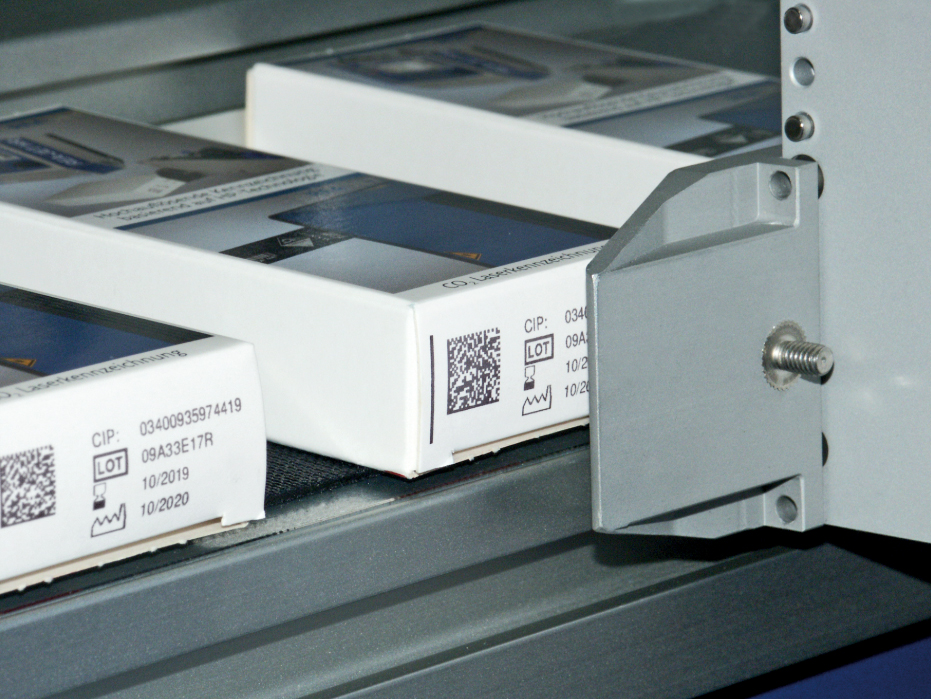
2D Data Matrix Codes
Data Matrix codes have become the preferred carrier for pharmaceutical and medical device information.
These compact codes can store:
- Serial numbers
- Lot numbers
- Expiration dates
- Product identifiers
Their small footprint makes them ideal for healthcare packaging.
GS1 Standards
GS1 standards provide globally recognized frameworks for product identification.
These standards support:
- Serialization
- Product authentication
- Data sharing
- Global interoperability
Many healthcare traceability programs rely on GS1 standards to ensure consistency across supply chains.
Vision Inspection Systems
Inspection systems verify that codes are:
- Present
- Accurate
- Readable
- Compliant
Automated inspection helps maintain data quality and prevents defective products from entering distribution channels.
Enterprise Data Platforms
Traceability requires more than marking products.
Organizations also need systems capable of:
- Capturing data
- Managing records
- Supporting audits
- Facilitating reporting
Enterprise traceability platforms provide centralized visibility across operations.
Building an Effective Medication Traceability System
A successful medication traceability system combines people, processes, and technology.
Manufacturers should focus on several key areas.
Accurate Product Identification
Every product must carry accurate and compliant identification information.
Coding systems should support:
- Serialization
- Lot coding
- Expiration dates
- Regulatory requirements
Integration Across Operations
Traceability systems should integrate with:
- ERP systems
- Manufacturing execution systems
- Warehouse management platforms
- Supply chain databases
Integration ensures data accuracy and reduces manual entry errors.
Data Integrity
Reliable traceability depends on reliable data.
Organizations must implement controls that ensure:
- Data accuracy
- Data security
- Audit readiness
- Regulatory compliance
Strong data governance practices are essential.
Scalability
As regulations evolve, traceability requirements become more complex.
Scalable systems help organizations adapt to:
- New regulations
- Expanded product lines
- Global operations
- Emerging technologies
Common Traceability Challenges
Healthcare manufacturers often face challenges when implementing traceability systems.
These may include:
- Legacy equipment limitations
- Data management complexity
- Global compliance requirements
- Supply chain integration challenges
- Serialization implementation costs
Addressing these challenges requires careful planning and technology selection.
Working with experienced coding and marking partners can significantly simplify implementation efforts.
The Future of Pharmaceutical and Medical Device Traceability
Traceability requirements will continue evolving as healthcare supply chains become more digital and interconnected.
Emerging trends include:
- Advanced serialization
- Blockchain-based verification
- Real-time supply chain visibility
- Digital product passports
- Enhanced data sharing standards
Organizations that invest in robust traceability infrastructure today will be better positioned to adapt to future regulatory and operational requirements.
As patient safety and supply chain security remain top priorities, traceability will continue playing a central role across healthcare industries.
Conclusion
Effective pharmaceutical and medical device traceability is essential for protecting patients, ensuring compliance, preventing counterfeiting, and maintaining supply chain visibility.
Through serialization, track-and-trace technologies, unique device identification, and advanced coding solutions, manufacturers can create comprehensive systems that support both regulatory requirements and operational excellence.
As healthcare regulations continue to evolve, organizations must adopt scalable, reliable traceability strategies capable of supporting long-term growth and compliance.
Contact REA JET to learn how advanced coding, marking, serialization, and verification solutions can help strengthen your pharmaceutical and medical device traceability programs.
 Or call 440-232-0555
Featured Coding & Marking Technologies View all
Most-requested coding & marking systems.
- 01 Large Character Inkjet Printers (DOD) Direct-to-product marking for cases, pallets, lumber, building materials and other porous surfaces
- 02 High-Resolution Inkjet Printers Print sharp text, logos, barcodes and 2D codes directly on products and packaging
- 03 Laser Systems Permanent, maintenance-free marking for traceability, compliance and product identification
- 04 Barcode Verification Systems Verify barcode quality and readability to meet retailer, GS1 and customer requirements
- 05 Small Character Inkjet Print date, lot, batch and traceability codes for production lines and packaging
- 06 Spray Mark Technology Reliable product identification and defect marking for manufacturing and industrial processes