
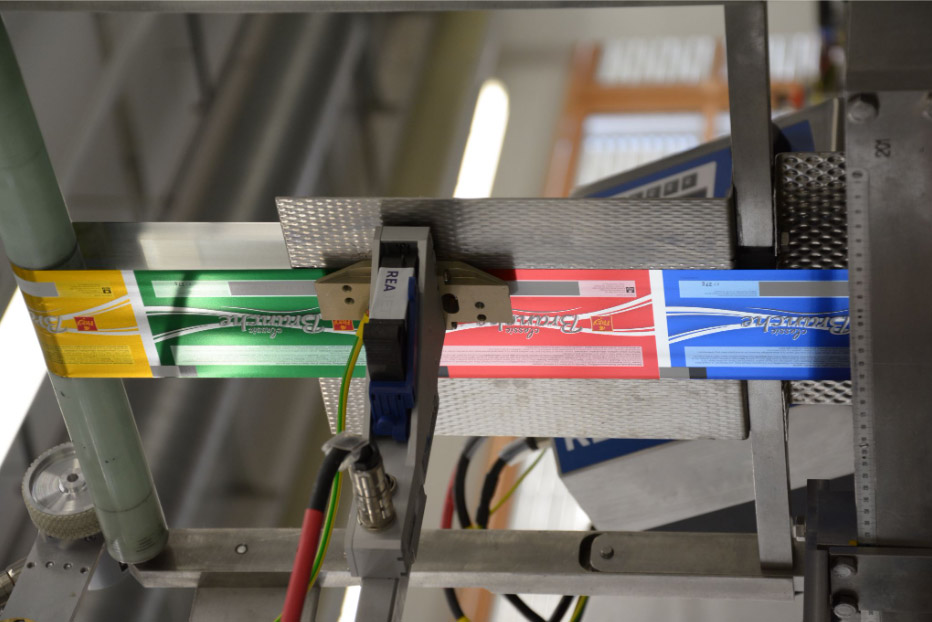
In consumer packaged goods manufacturing, traceability depends on the ability to connect every finished product with the conditions under which it was produced.
Manufacturers need to know when a product was made, where it was made, which production line was used, which raw materials or packaging components were involved, and where the finished product was shipped.
Batch numbers create that connection.
A clearly printed batch code allows manufacturers, distributors, retailers, regulators, and quality teams to identify products associated with a specific production run. When an issue occurs, batch information can help narrow the scope of an investigation, isolate affected inventory, and support a faster, more targeted response.
For this reason, batch number printing for CPG traceability is much more than applying a short string of letters and numbers to a package. It is an essential part of quality control, recall readiness, inventory management, regulatory compliance, and supply chain visibility.
Effective batch coding requires reliable printing or marking technology, accurate data, consistent code structures, durable placement, automated verification, and integration with production systems.
This guide explains how batch number printing supports CPG traceability and outlines the technologies, processes, and best practices manufacturers should use to create accurate, readable, and dependable batch codes.
What Is a Batch Number?
A batch number is a unique identifier assigned to a group of products manufactured under similar conditions. The batch may be defined by:
- Production date
- Production time
- Manufacturing facility
- Production line
- Shift
- Recipe
- Ingredient group
- Packaging material
- Processing conditions
- Quality control window
Depending on the manufacturer, the terms batch code and lot code may be used interchangeably. In other operations, they may have slightly different meanings. For example, a batch may refer to a specific production process or formulation, while a lot may refer to a larger group of products packaged or released together.
Regardless of terminology, the purpose is the same: to create a traceable connection between physical products and production records.
Why Batch Number Printing Matters in CPG Manufacturing
Batch coding supports several important functions across consumer packaged goods operations.
Product Traceability
The primary purpose of a batch code is to identify the production history of a product. When a package is traced back through its batch number, the manufacturer may be able to identify:
- Raw material lots
- Ingredient suppliers
- Packaging materials
- Production equipment
- Operators
- Shift information
- Processing conditions
- Quality test results
This information is essential when investigating complaints, quality issues, or potential safety risks.
Recall Readiness
When a recall becomes necessary, accurate batch coding helps manufacturers identify affected products quickly. Without batch information, a company may have to recall a much larger quantity of product than necessary. With precise batch traceability, the manufacturer may be able to isolate:
- A single production line
- A particular shift
- A defined time period
- A specific ingredient lot
- A particular packaging run
This can significantly reduce recall cost, waste, and disruption.
Inventory Management
Batch numbers support inventory rotation and stock control. Manufacturers, warehouses, distributors, and retailers can use batch information to manage:
- First-in, first-out inventory
- First-expired, first-out inventory
- Product holds
- Quality releases
- Shelf-life monitoring
- Returned goods
Regulatory and Customer Compliance
Many industries and customers require products to carry traceable production information. Retailers and distributors may also establish specific coding standards for:
- Code placement
- Code content
- Barcode format
- Human-readable text
- Case and pallet identification
Consistent batch number printing helps manufacturers meet these expectations.
What Information Should a Batch Code Include?
The information contained in a batch number varies by company, product, and industry. A batch code may include:
- Production date
- Julian date
- Manufacturing site
- Production line
- Shift
- Product identifier
- Batch sequence
- Packaging line
- Time of production
For example, a batch code might combine a plant identifier, production date, line number, and shift code. Manufacturers should avoid including unnecessary information that makes the code too long or difficult to print. At the same time, the code must contain enough information to connect the product with the correct internal records. The structure should be:
- Unique
- Consistent
- Documented
- Easy to generate
- Easy to interpret internally
- Compatible with production systems
Standardize the Batch Number Format
A standardized batch structure improves traceability across production lines and facilities. The standard should define:
- Character length
- Letter and number sequence
- Date format
- Plant identifier
- Line identifier
- Shift format
- Separators
- Use of leading zeros
- Human-readable requirements
Manufacturers should avoid allowing operators to create batch numbers manually. Uncontrolled formats can result in:
- Duplicate codes
- Missing information
- Inconsistent records
- Traceability gaps
- Confusion during recalls
The approved batch structure should be managed by quality, operations, regulatory, or data governance teams.
Batch Numbers Versus Serial Numbers
Batch numbers identify groups of products. Serial numbers identify individual products. For example, every product in a single production run may carry the same batch number, while each unit may receive a different serial number.
Batch-level traceability is common in CPG manufacturing because it provides an effective balance between operational complexity and recall precision. Serialization may be appropriate when manufacturers require:
- Individual product authentication
- Unit-level tracking
- Counterfeit prevention
- High-value product control
- Consumer-specific data
- Regulatory serialization
Some products may carry both a batch number and a unique serial number.
Where Batch Numbers Are Printed
Batch numbers may be applied at several packaging levels.
Primary Packaging
Primary packaging is the material that directly contains or protects the product. Examples include:
- Bottles
- Jars
- Cans
- Pouches
- Tubes
- Trays
- Flexible packages
Printing the batch number on primary packaging helps ensure that the code remains with the product even if secondary packaging is removed.
Secondary Packaging
Secondary packaging groups or protects primary packages. Examples include:
- Paperboard cartons
- Multipacks
- Shrink-wrapped bundles
- Retail-ready cartons
Secondary packaging may carry more detailed traceability information than the primary package.
Tertiary Packaging
Tertiary packaging supports storage, shipping, and distribution. Examples include:
- Corrugated cases
- Shipping cartons
- Pallets
Cases and pallets may include batch information in human-readable text, linear barcodes, or 2D codes. Strong CPG product traceability often requires consistent identification across multiple packaging levels.
Choosing the Right Batch Coding Technology
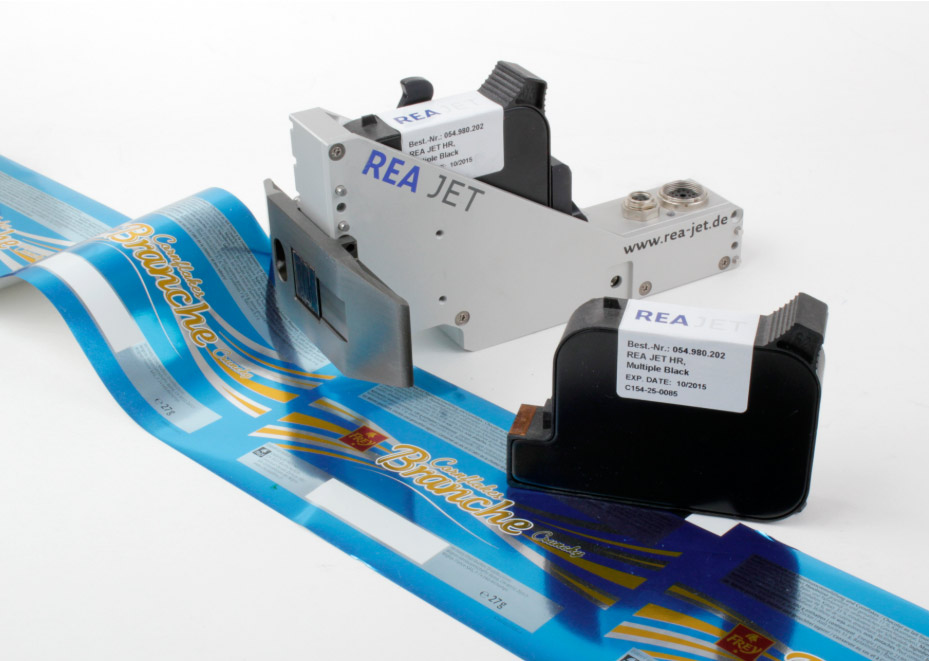
Several technologies can be used for batch number printing. The right choice depends on:
- Packaging material
- Line speed
- Print area
- Code size
- Resolution
- Durability
- Environment
- Maintenance requirements
Common technologies include Continuous Inkjet, Thermal Inkjet, laser marking, thermal transfer overprinting, high-resolution case printing, and print-and-apply labeling.
Continuous Inkjet for Batch Coding
Continuous Inkjet, or CIJ, is widely used for high-speed batch coding. CIJ systems apply ink without contacting the product, making them suitable for:
- Bottles
- Cans
- Jars
- Pouches
- Flexible packaging
- Plastic containers
- Metal components
CIJ systems are commonly used to print:
- Batch numbers
- Lot codes
- Date codes
- Time stamps
- Short product identifiers
Benefits include:
- High-speed operation
- Flexible printhead placement
- Printing on curved surfaces
- Compatibility with many substrates
Manufacturers should select ink based on the surface and production environment.
Thermal Inkjet for High-Resolution Batch Codes
Thermal Inkjet, or TIJ, produces high-resolution text and machine-readable codes. It is often used on:
- Cartons
- Labels
- Paperboard
- Secondary packaging
- Porous materials
- Coated materials with appropriate inks
TIJ systems can print:
- Batch numbers
- Barcodes
- Data Matrix codes
- QR codes
- Product information
- Expiration dates
TIJ is a strong choice when batch data must be combined with detailed or machine-readable information.
Laser Marking for Permanent Batch Identification
Laser marking creates a durable code by altering the package surface. Depending on the material, the laser may:
- Remove a coating
- Change the material color
- Etch the surface
- Engrave the material
- Expose a contrasting layer
Laser systems may be used on:
- Glass
- Metal
- Plastics
- Coated cartons
- Labels
- Certain flexible materials
Benefits include:
- Permanent marks
- No ink
- Minimal consumables
- High precision
- Reduced routine maintenance
Application testing is necessary to confirm that the laser creates sufficient contrast without damaging the package.
Thermal Transfer Overprinting
Thermal transfer overprinting is commonly used on flexible packaging. This technology can produce high-quality batch codes on:
- Films
- Pouches
- Bags
- Flow-wrap materials
- Labels
Thermal transfer systems can print:
- Text
- Batch numbers
- Barcodes
- 2D codes
- Graphics
Print quality depends on correct:
- Ribbon selection
- Printhead temperature
- Pressure
- Tension
- Substrate compatibility
High-Resolution Direct Case Printing
High-resolution inkjet systems are often used to print batch and product information directly onto corrugated cases. These systems can apply:
- Batch numbers
- Product descriptions
- Barcodes
- Shipping data
- Logos
- Handling information
Direct case printing may allow manufacturers to reduce:
- Preprinted case inventory
- Labels
- Packaging waste
- Changeover complexity
The code design should account for corrugated texture, absorption, and surface variation.
Print-and-Apply Labeling
Print-and-apply systems create labels and automatically apply them to cartons, cases, or pallets. They are often used when:
- High barcode quality is required
- Direct printing is difficult
- Large amounts of data are needed
- Customer-specific labels are required
- The surface is rough or inconsistent
Labels can carry:
- Batch numbers
- Product identifiers
- Shipping information
- GS1-128 barcodes
- Serial shipping container codes
- 2D codes
Label placement and adhesion must be controlled to prevent wrinkles, lifting, folds, or missing labels.
Match the Ink or Marking Method to the Package
CPG packaging includes a wide variety of materials common substrates include:
- PET
- HDPE
- Polypropylene
- Polyethylene
- Glass
- Aluminum
- Steel
- Paperboard
- Corrugated fiberboard
- Foil
- Labels
- Laminated films
The selected ink or marking method must provide:
- Adequate adhesion
- Strong contrast
- Fast drying
- Resistance to abrasion
- Resistance to moisture
- Resistance to temperature changes
- Long-term readability
An ink that works well on a dry carton may fail on a cold, wet bottle. A laser that marks one plastic clearly may produce insufficient contrast on another. Manufacturers should test the actual production material under realistic operating and distribution conditions.
Choose the Right Code Placement
Batch code placement directly affects readability and durability. The code should be placed:
- On a flat or stable surface
- Away from seams
- Away from folds
- Away from package edges
- Away from heavy abrasion
- Away from glare or reflective areas
- Where it remains visible after packing
For flexible packaging, manufacturers should avoid areas that may wrinkle, stretch, or become distorted. For bottles and cans, surface curvature should be considered. For cartons and cases, the code should not be covered by:
- Tape
- Labels
- Glue
- Straps
- Stretch wrap
- Pallet stacking
Code placement should be considered during packaging design, not after the package is finalized.
Maintain Strong Contrast
A batch number must remain easy to read throughout the product lifecycle. Good contrast usually involves dark characters on a light background. Manufacturers should avoid printing over:
- Complex graphics
- Gradients
- Photographs
- Reflective finishes
- Dark artwork
- Transparent windows
- Metallic coatings
A dedicated code panel can improve visibility. Contrast is especially important when batch data is included in a barcode, QR code, or Data Matrix code.
Ensure the Code Is Legible
Batch numbers must be readable by operators, quality teams, customers, and investigators. Legibility depends on:
- Character size
- Font
- Print resolution
- Dot formation
- Spacing
- Contrast
- Surface stability
- Printhead distance
Characters that look similar should be avoided when possible. Examples include:
- 0 and O
- 1 and I
- 5 and S
- 8 and B
The font should be simple and clear.
Automate Batch Number Generation
Manual entry creates one of the greatest risks in batch coding. Operators may:
- Enter the wrong batch
- Select the wrong message
- Use a previous production code
- Miscalculate a date
- Apply the wrong product identifier
Automating batch number generation can significantly reduce these errors. Coding systems may receive data from:
- ERP platforms
- Manufacturing execution systems
- Product databases
- Packaging line controls
- Warehouse systems
- Production order software
The system can automatically generate or populate:
- Batch number
- Production date
- Time
- Line identifier
- Shift
- Product code
- Expiration date
Use Approved Production Recipes
Each SKU or package format should have an approved coding recipe. The recipe may define:
- Batch code structure
- Font
- Character size
- Code position
- Date format
- Printer settings
- Barcode format
- Expiration calculation
- Product identifier
Operators should select approved recipes rather than manually creating messages. Role-based permissions can restrict who is allowed to:
- Create templates
- Modify formulas
- Approve messages
- Change batch structures
This reduces errors and supports consistent production.
Integrate Batch Coding With Production Systems
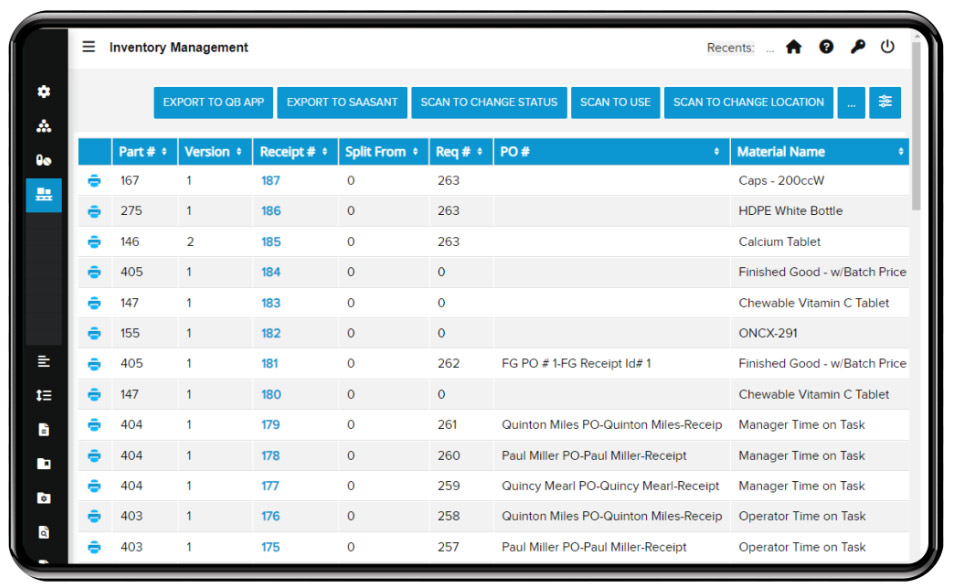
Batch coding should be connected to the larger production process. Integration can link the physical code with records such as:
- Production order
- Ingredient lots
- Packaging materials
- Processing conditions
- Quality checks
- Finished goods inventory
- Shipment records
This creates a complete traceability record. When a product is scanned or its batch number is entered, the manufacturer should be able to retrieve the associated production history.
Capture Raw Material and Packaging Data
Batch number printing is only one part of traceability. The manufacturer must also capture the inputs associated with the batch. These may include:
- Ingredient lots
- Raw material lots
- Packaging material lots
- Label lots
- Container lots
- Closure lots
- Supplier information
- Receiving records
If a supplier later reports an issue, the manufacturer should be able to identify every finished batch that used the affected material.
Connect Batch Numbers to Quality Records
Quality data should be linked to the batch record. Relevant information may include:
- Inspection results
- Test results
- Product release status
- Processing temperatures
- Weight checks
- Seal inspections
- Allergen controls
- Cleaning records
- Vision inspection results
This connection helps quality teams investigate complaints and determine whether a batch meets approved specifications.
Use Machine-Readable Codes
Human-readable batch numbers are valuable, but machine-readable codes improve data capture. Batch information may be encoded in:
- Code 128
- GS1-128
- Data Matrix
- QR codes
- GS1 DataMatrix
- GS1 QR Code
Machine-readable codes can help automate:
- Production tracking
- Warehouse receiving
- Inventory movement
- Case aggregation
- Shipping verification
- Recall identification
The printed data should match the human-readable text. A mismatch between encoded and printed information creates a serious traceability risk.
Prepare for 2D Barcode Adoption
CPG manufacturers are increasingly preparing for broader use of 2D codes. These codes can contain:
- Product identifier
- Batch number
- Expiration date
- Serial number
- Web-based product data
- Consumer information
2D codes may support:
- Supply chain traceability
- Recall communication
- Product authentication
- Inventory management
- Consumer engagement
- GS1 Digital Link
Printing reliable 2D codes requires:
- Adequate resolution
- Strong contrast
- Correct module size
- Stable package movement
- Accurate data
- Automated verification
Manufacturers selecting new batch coding equipment should consider future 2D code requirements.
Verify Every Batch Number
Printing a batch code does not guarantee that it is correct. Automated vision systems can inspect:
- Code presence
- Batch number accuracy
- Character formation
- Code position
- Contrast
- Barcode readability
- 2D code quality
A vision system may compare the printed code with the approved production order. If a defect is detected, the system can:
- Reject the package
- Trigger an alarm
- Stop the line
- Record the event
Inline verification is especially valuable on high-speed lines where a short error can affect thousands of units.
Understand Scanning Versus Verification
A scanner determines whether a code can be read. A verification system evaluates whether the code meets a defined quality standard. A barcode may scan successfully on one device but still perform poorly elsewhere. Verification may evaluate:
- Symbol contrast
- Modulation
- Decodability
- Defects
- Quiet zones
- Grid uniformity
- Axial nonuniformity
- Print growth
Manufacturers should define acceptable grades based on:
- Customer standards
- Retailer requirements
- GS1 guidelines
- Internal quality objectives
- Distribution environments
Inspect Codes Throughout Production
A startup inspection is essential, but batch code quality may change during the run. Potential causes include:
- Clogged nozzles
- Ink depletion
- Dirty lenses
- Product movement
- Packaging variation
- Temperature changes
- Ribbon wear
- Sensor movement
Codes should be inspected:
- At startup
- After changeovers
- After maintenance
- After consumable replacement
- At scheduled intervals
- At the end of the run
Continuous inspection provides the strongest control.
Build Batch Coding Into Changeovers
Product changeovers create a high risk of coding errors. A standard changeover process should include:
- Confirming the production order
- Removing the previous product
- Selecting the new coding recipe
- Verifying the batch number
- Checking date calculations
- Adjusting printhead position
- Inspecting the first package
- Approving production
Line clearance should confirm that materials and messages from the previous production run have been removed. This prevents the wrong batch number from being applied to a new product.
Maintain Coding Equipment Proactively
Poorly maintained equipment can create missing, faded, or unreadable batch codes. Preventive maintenance may include:
- Cleaning printheads
- Cleaning laser optics
- Replacing filters
- Inspecting sensors
- Checking encoder wheels
- Reviewing fluid levels
- Inspecting mounts
- Checking cables
- Reviewing alarms
- Testing communication
Maintenance frequency should reflect:
- Production volume
- Equipment type
- Operating hours
- Plant environment
- Substrate
- Manufacturer recommendations
Account for Production Environment
CPG facilities can present demanding conditions. Common challenges include:
- Dust
- Moisture
- Condensation
- Washdown
- Heat
- Cold
- Grease
- Sugar
- Flour
- Cleaning chemicals
Equipment should be selected and installed to withstand the environment. Potential protections include:
- Enclosures
- Air filtration
- Splash guards
- Temperature control
- Sealed connectors
- Proper ingress protection
Ink and label adhesives must also perform under actual plant and distribution conditions.
Preserve Batch Identity During Rework
Rework can create traceability gaps if it is not carefully controlled. When products are:
- Repacked
- Relabeled
- Reprocessed
- Combined
- Reassigned
The manufacturer should document:
- Original batch number
- Rework date
- New batch number
- Quantity affected
- Reason for rework
- Final disposition
The connection between the original and new batch records must remain intact.
Track Batch Numbers Through Warehousing
Batch traceability continues after production. Warehouse systems should capture:
- Storage location
- Quantity
- Hold status
- Release status
- Picking activity
- Pallet assignment
- Shipment destination
Machine-readable case and pallet codes can simplify this process. Warehouse personnel should be able to identify which batch numbers are stored in each location.
Track Batch Numbers Through Distribution

Shipping records should connect customers and destinations with specific batches. Relevant information may include:
- Customer
- Distributor
- Retailer
- Shipment date
- Shipment quantity
- Batch number
- Case identifier
- Pallet identifier
During a recall, this information enables the manufacturer to determine where affected products were sent. Incomplete distribution records can significantly delay recall response.
Support Mock Recalls
Mock recalls test whether a traceability system works under realistic conditions. A mock recall may begin with:
- A raw material lot
- A finished batch number
- A packaging material
- A customer complaint
The manufacturer then attempts to identify:
- Affected products
- Remaining inventory
- Shipping destinations
- Production records
- Quantities accounted for
Batch number printing is essential because the physical code must match the digital traceability record. Mock recalls can reveal problems with:
- Code quality
- Data accuracy
- Recordkeeping
- Warehouse tracking
- Distribution records
- Employee responsibilities
Measure Batch Coding Performance
Manufacturers should monitor key metrics. Useful measures include:
- Missing-code rate
- Incorrect-code rate
- Unreadable-code rate
- Verification failures
- Rework volume
- Coding-related downtime
- Barcode grade
- Recall response time
- Batch traceability accuracy
Tracking these metrics helps identify recurring problems and supports continuous improvement.
Common Batch Number Printing Mistakes
Common mistakes include:
- Using inconsistent batch formats
- Allowing manual message creation
- Printing codes too small
- Placing codes over graphics
- Choosing incompatible ink
- Failing to test adhesion
- Ignoring condensation
- Skipping code verification
- Failing to link codes to production data
- Losing batch identity during rework
- Maintaining incomplete shipping records
These risks should be addressed during system design and operating procedure development.
Create a Standard Batch Coding Procedure
A documented batch coding procedure should define:
- Approved code structure
- Data source
- Recipe selection
- Printer setup
- Code placement
- Quality checks
- Verification
- Changeovers
- Rework handling
- Maintenance
- Record retention
- Escalation procedures
Responsibilities should be clearly assigned to:
- Operators
- Supervisors
- Quality personnel
- Maintenance technicians
- IT teams
- Warehouse personnel
Standardization improves consistency across shifts, lines, and facilities.
Best Practices for Batch Number Printing
A reliable batch coding program should include:
- Standardized batch structures
- Automated code generation
- Approved production recipes
- Reliable coding technology
- Substrate-specific ink selection
- Consistent code placement
- Strong contrast
- Human-readable text
- Machine-readable codes
- Automated verification
- Production data integration
- Preventive maintenance
- Controlled changeovers
- Warehouse and shipping traceability
- Regular mock recalls
Together, these practices create a stronger foundation for CPG traceability.
Conclusion
Effective batch number printing for CPG traceability helps manufacturers connect physical products with production, quality, warehouse, and distribution records.
A reliable batch code supports:
- Product identification
- Recall readiness
- Inventory control
- Quality investigations
- Regulatory compliance
- Supply chain visibility
However, successful batch coding requires more than selecting a printer.
Manufacturers must standardize code formats, automate batch generation, choose technology suited to the packaging material, verify every code, integrate production data, maintain equipment, and preserve traceability through warehousing and distribution.
When these elements work together, batch number printing becomes a powerful tool for reducing risk and improving operational control.
Contact REA JET to learn how industrial inkjet printing, laser marking, software integration, code verification, and traceability solutions can improve batch coding performance across your CPG manufacturing and packaging operations.
 Or call 440-232-0555
Featured Coding & Marking Technologies View all
Most-requested coding & marking systems.
- 01 Large Character Inkjet Printers (DOD) Direct-to-product marking for cases, pallets, lumber, building materials and other porous surfaces
- 02 High-Resolution Inkjet Printers Print sharp text, logos, barcodes and 2D codes directly on products and packaging
- 03 Laser Systems Permanent, maintenance-free marking for traceability, compliance and product identification
- 04 Barcode Verification Systems Verify barcode quality and readability to meet retailer, GS1 and customer requirements
- 05 Small Character Inkjet Print date, lot, batch and traceability codes for production lines and packaging
- 06 Spray Mark Technology Reliable product identification and defect marking for manufacturing and industrial processes