Selecting the right coding technology for packaging is one of the most important decisions for consumer packaged goods (CPG) manufacturers. Coding systems are responsible for applying critical information such as expiration dates, batch numbers, traceability identifiers, and barcodes onto products and packaging materials.
These markings are not just operational details—they support regulatory compliance, supply chain visibility, and consumer safety. As production lines become faster and packaging formats more diverse, manufacturers must carefully evaluate which technology best supports their operational needs.
Three of the most common packaging coding technologies used in modern manufacturing are Continuous Inkjet (CIJ), Laser Marking, and High-Resolution Inkjet. Each offers unique strengths depending on the packaging material, production speed, and code complexity.
This guide compares these technologies and helps manufacturers determine the best solution for their packaging lines.
Why Choosing the Right Coding Technology Matters
In modern manufacturing environments, product coding equipment is installed directly on high-speed packaging lines. The selected coding technology must operate reliably while maintaining clear, readable marks under demanding conditions.
Choosing the wrong coding system can lead to several challenges:
- Poor code readability
- Increased maintenance costs
- Production downtime
- Compliance issues
- Product recalls
For CPG manufacturers, packaging coding technologies must balance durability, speed, and flexibility.
Additionally, regulatory requirements and traceability expectations continue to evolve. Codes must remain legible throughout distribution and storage, and increasingly they must support digital traceability systems such as barcodes or QR codes.
Selecting the right coding technology ensures that manufacturers can meet operational and compliance demands while maintaining efficient production.
Continuous Inkjet (CIJ) Coding Explained
Continuous Inkjet (CIJ) technology is one of the most widely used date coding technology solutions in CPG manufacturing.
CIJ systems generate a continuous stream of ink droplets that are electrically charged and directed toward the packaging surface to form characters and symbols. Unused droplets are recirculated back into the system.
Because CIJ printing is a non-contact process, it works well on curved surfaces and moving products.
Advantages
CIJ coding offers several advantages that make it popular across the food, beverage, and consumer goods industries.
First, it supports extremely high production speeds. Many packaging lines operate at hundreds of units per minute, and CIJ systems can keep pace without sacrificing print quality.
Second, CIJ technology works on a wide variety of materials, including:
- Plastics
- Metal cans
- Glass bottles
- Flexible packaging films
- Paperboard cartons
This versatility makes CIJ one of the most flexible packaging coding technologies available.
Another advantage is its ability to print variable data. Manufacturers can easily change batch numbers, timestamps, and expiration dates in real time.
Limitations
Despite its versatility, CIJ does have some limitations.
Because it relies on liquid ink, the system requires consumables such as inks and solvents. This means ongoing operating costs and routine maintenance.
Additionally, CIJ systems typically produce lower resolution compared with other technologies. While they are ideal for date codes and simple text, they may not be suitable for complex graphics or high-density barcodes.
Typical Applications
CIJ is commonly used in applications such as:
- Beverage bottle date coding
- Food packaging expiration dates
- Batch coding for flexible packaging
- Production timestamps on metal cans
In short, CIJ is an excellent choice for high-speed production lines requiring simple but reliable coding.
Laser Marking for Packaging
Laser marking is another widely used coding technology for packaging, particularly when permanent codes are required.
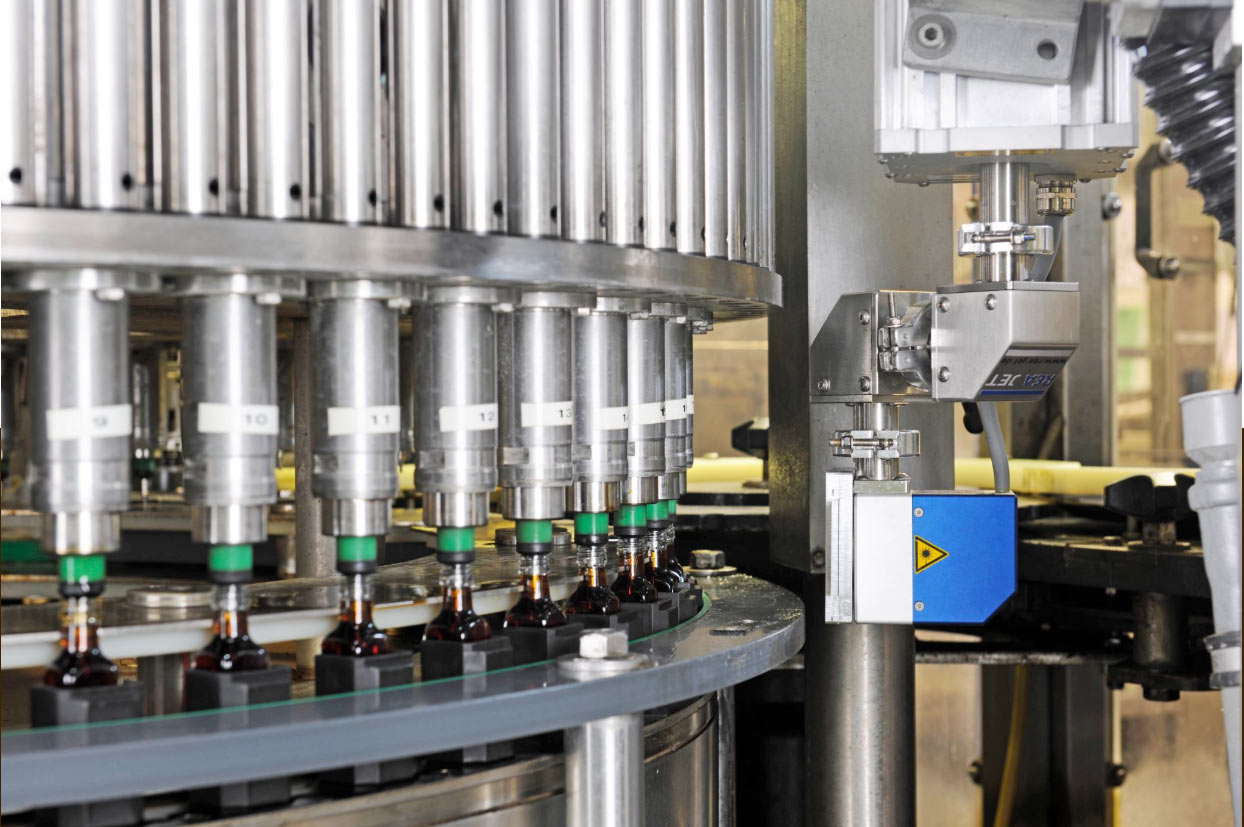
Laser systems use focused beams of light to alter the surface of packaging materials. The process can create contrast by etching, discoloring, or removing layers of material.
Because laser coding does not rely on inks or solvents, it is considered a clean and low-maintenance technology.
Benefits of Permanent Marking
One of the biggest advantages of laser marking packaging is durability. Laser marks are permanent and resistant to smudging, fading, or abrasion.
This makes laser systems ideal for applications where codes must remain readable throughout a product’s lifecycle.
Other benefits include:
- No consumables required
- Reduced maintenance compared with ink-based systems
- High precision and clarity
- Environmentally friendly operation
For manufacturers seeking to reduce operating costs related to inks and solvents, laser technology can provide long-term efficiency.
Ideal Packaging Materials
Laser marking works best on certain materials, including:
- Glass bottles
- Metal cans
- Aluminum packaging
- Some plastics
- Coated paperboard
However, laser systems may not work effectively on all substrates. Some flexible films or light-colored plastics may require additives or coatings to produce high-contrast marks.
High-Resolution Inkjet Technology
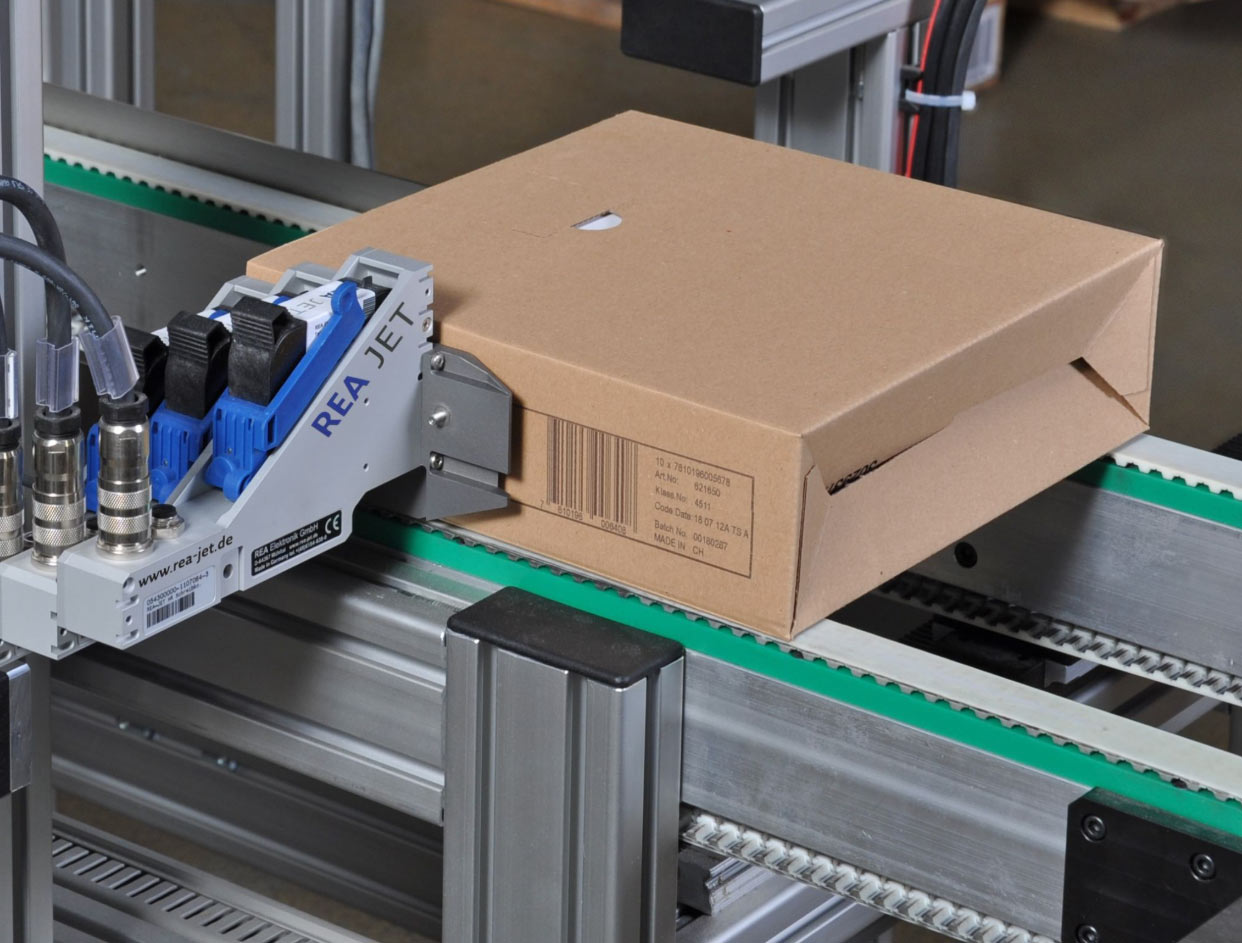
High-resolution inkjet printing is another important option among modern packaging coding technologies. Unlike CIJ, high-resolution systems are designed to produce detailed graphics, large characters, and scannable barcodes.
These printers use controlled droplets to produce crisp, high-quality marks with greater detail than standard CIJ systems.
When High-Quality Graphics or Barcodes Are Required
High-resolution inkjet technology is often chosen when packaging requires more complex codes.
Examples include:
- Large case codes on corrugated cartons
- High-resolution logos or branding elements
- 2D barcodes such as Data Matrix or QR codes
- Serialized tracking codes
In many manufacturing environments, high-resolution inkjet printers are used on secondary packaging such as cartons, cases, or pallets.
Because these surfaces offer larger printable areas, the technology can produce clear and easily scannable codes.
High-resolution inkjet also supports industrial inkjet printing packaging applications where graphics quality and barcode readability are essential.
Comparing CIJ, Laser, and High-Resolution Inkjet
Each coding technology has unique strengths. The best solution depends on the application.
CIJ systems excel in high-speed environments where simple codes are needed on a wide variety of materials. Their versatility makes them a staple in many CPG production lines.
Laser marking offers permanent, high-contrast codes without consumables. It is ideal for materials such as glass or metal and for manufacturers seeking lower long-term maintenance.
High-resolution inkjet provides superior print quality and barcode capability. It is often used for secondary packaging where larger codes are required.
Many manufacturers actually use a combination of technologies across different packaging stages.
For example:
- CIJ for date coding cans
- Laser marking for bottles
- High-resolution inkjet for case coding
This hybrid approach allows manufacturers to optimize coding across the entire production process.
Factors to Consider When Selecting a Coding System
Choosing the best coding technology for packaging requires evaluating several important factors.
Packaging Material
Different packaging materials require different marking approaches.
Flexible films may work best with CIJ systems, while metal or glass packaging may be ideal for laser marking.
Corrugated cases often benefit from high-resolution inkjet printing.
Understanding substrate compatibility is critical to selecting the right solution.
Production Speed
High-speed production lines require coding systems capable of keeping pace without compromising readability.
CIJ technology is particularly well suited for extremely fast packaging environments.
Laser and high-resolution systems can also operate at high speeds but may require additional configuration depending on the application.
Compliance Requirements
Regulatory requirements often dictate the type and quality of codes required.
For example, food packaging may require clear expiration dates, while pharmaceutical products may require serialized 2D barcodes.
Manufacturers must ensure that selected coding technologies can meet both regulatory and retailer requirements.
How to Select the Right Coding Solution for Your Packaging Line
Selecting the best coding system involves evaluating both technical and operational factors.
Manufacturers should begin by assessing their packaging materials, production speeds, and code requirements. Understanding the complexity of the required marks helps narrow down suitable technologies.
Next, companies should consider long-term operational costs. Ink-based systems involve consumables, while laser systems require higher initial investment but lower operating costs.
Integration with existing packaging equipment is also important. Coding systems must synchronize with conveyors, sensors, and packaging machines to ensure accurate placement.
Finally, manufacturers should partner with technology providers that offer reliable service and technical support.
With the right strategy, companies can implement coding solutions that enhance traceability, improve efficiency, and support long-term production goals.
Conclusion
Choosing the right coding technology for packaging is essential for CPG manufacturers seeking reliable product identification and traceability.
CIJ, laser, and high-resolution inkjet technologies each offer unique benefits depending on production requirements and packaging materials.
By understanding the strengths and limitations of each approach, manufacturers can implement coding systems that ensure compliance, maintain product integrity, and support efficient packaging operations.
Contact REA JET to explore how agile coding and marking can unlock your packaging potential.
 Or call 440-232-0555
Featured Coding & Marking Technologies View all
Most-requested coding & marking systems.
- 01 Large Character Inkjet Printers (DOD) Direct-to-product marking for cases, pallets, lumber, building materials and other porous surfaces
- 02 High-Resolution Inkjet Printers Print sharp text, logos, barcodes and 2D codes directly on products and packaging
- 03 Laser Systems Permanent, maintenance-free marking for traceability, compliance and product identification
- 04 Barcode Verification Systems Verify barcode quality and readability to meet retailer, GS1 and customer requirements
- 05 Small Character Inkjet Print date, lot, batch and traceability codes for production lines and packaging
- 06 Spray Mark Technology Reliable product identification and defect marking for manufacturing and industrial processes