
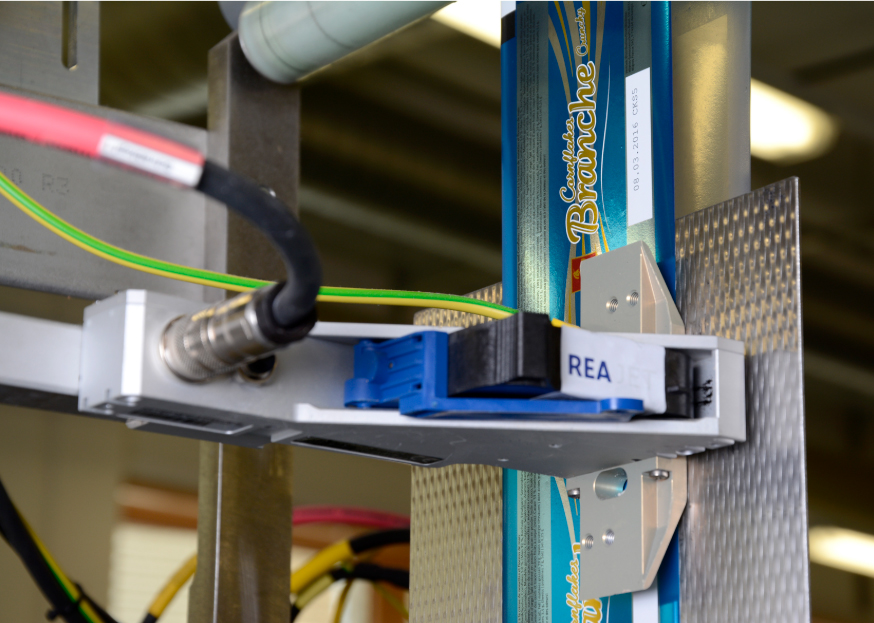
In the food and beverage industry, date codes are small markings with major responsibilities.
A clearly printed production date, lot number, best-before date, or use-by date helps manufacturers protect consumers, comply with labeling requirements, manage inventory, improve traceability, and respond quickly when product quality issues arise. When date codes are missing, incorrect, unreadable, or poorly placed, the result can be wasted product, production delays, retailer complaints, compliance exposure, and costly recalls.
For consumer packaged goods manufacturers, effective date coding is not simply a printing task, it is a critical part of quality assurance and supply chain management.
That’s why clear, reliable date coding requires the right combination of technology, processes, and verification.
The right approach helps ensure that every package leaves the production line with accurate, readable, and durable information. It also creates a stronger foundation for lot traceability, inventory control, regulatory compliance, and consumer confidence.
This guide explores the most important date coding best practices for food and beverage CPG manufacturers and explains how to build a more reliable coding process across primary, secondary, and tertiary packaging operations.
Why Legible Date Coding Matters in Food and Beverage CPG
Date coding provides essential information about a product’s production history and usable life. Depending on the product and market, a date code may communicate:
- Production date
- Packaging date
- Best-before date
- Use-by date
- Sell-by date
- Expiration date
- Lot number
- Batch number
- Shift or line information
These codes support several business and regulatory functions.
Consumer Safety
Date codes help consumers determine whether products are within appropriate quality or safety windows.
For some products, especially highly perishable foods, the date may relate directly to safe consumption. For others, it may primarily indicate expected quality, freshness, taste, or texture.
Clear coding helps consumers make informed decisions and reduces confusion at the point of purchase or use.
Product Quality
Food and beverage products may change over time due to temperature, moisture, oxidation, light exposure, or microbial activity.
Date codes help manufacturers, retailers, and consumers identify how long a product is expected to maintain its intended quality.
Inventory Management
Retailers rely on date codes to rotate stock and reduce waste.
Accurate coding supports first-expired, first-out inventory practices and helps distribution centers identify products approaching the end of their recommended shelf life.
Traceability
Date codes frequently work alongside lot and batch identifiers.
These markings enable manufacturers to trace products back to specific production runs, ingredients, facilities, equipment, and time periods.
Recall Management
When a recall is necessary, reliable date and lot coding allows manufacturers to isolate affected products more precisely.
Without accurate codes, a company may be forced to recall a much larger quantity of inventory than necessary.
Understand the Difference Between Date Code Types

One of the first date coding best practices is to clearly define what each code means.
Terms such as best-before, sell-by, use-by, and expiration date are sometimes used interchangeably by consumers, but they may serve different purposes.
Best-Before Date
A best-before date generally indicates the period during which the product is expected to maintain optimal quality.
After this date, the food may still be safe, but taste, texture, color, or freshness may begin to decline.
Use-By Date
A use-by date is typically associated with products where safety or rapid quality degradation is a concern.
Consumers are generally advised not to use products after this date.
Sell-By Date
A sell-by date is often intended primarily for retailers.
It helps stores manage stock rotation and determine how long a product should remain available for sale.
Expiration Date
An expiration date indicates the point after which a product should no longer be considered suitable for use.
The exact legal meaning may vary based on the product category and regulatory environment.
Manufacturers should work with legal, regulatory, quality, and food safety teams to determine which terminology is appropriate for each product.
Establish a Standard Coding Format
Consistency is one of the most important principles in CPG date coding.
Manufacturers should define standard formats for all products, facilities, and lines whenever possible. A clear coding standard should specify:
- Date sequence
- Number of digits
- Month format
- Year format
- Time format
- Lot structure
- Line identifier
- Plant identifier
- Shift identifier
For example, a manufacturer might use:
- MM/DD/YYYY
- DD/MM/YYYY
- YYYY-MM-DD
- Julian date
- Custom lot sequence
The chosen format should reflect regulatory requirements, customer expectations, export markets, and internal traceability needs.
Ambiguous formats should be avoided.
A code such as 07/08/26 could mean July 8 or August 7 depending on the region. Using a standardized format with a four-digit year or letter-based month abbreviation can reduce confusion.
Select the Right Coding Technology
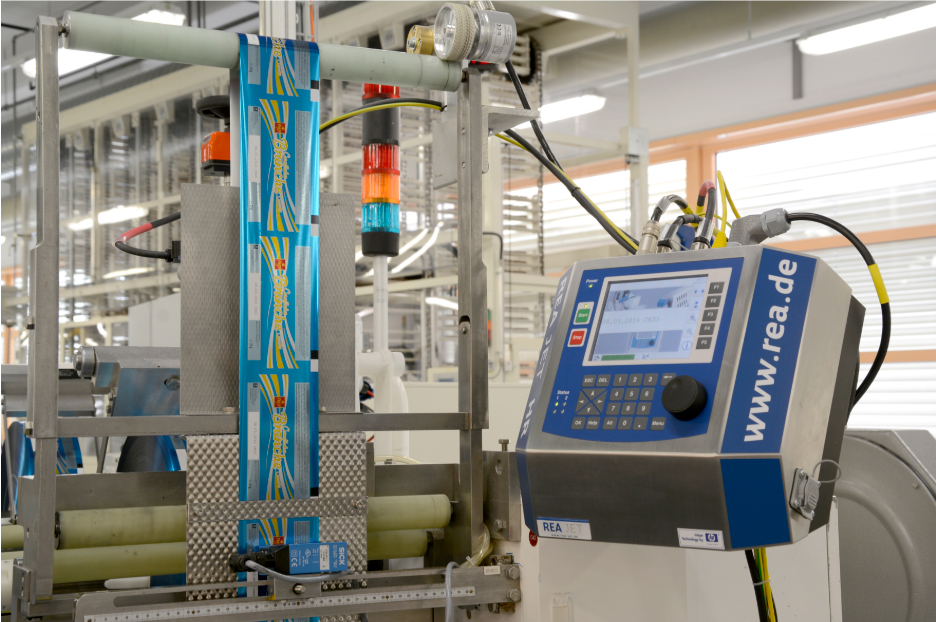
Different products and packaging materials require different coding methods.
The most common technologies used for food and beverage date coding include Continuous Inkjet, Thermal Inkjet, laser marking, thermal transfer overprinting, and print-and-apply labeling.
Continuous Inkjet
Continuous Inkjet, or CIJ, is widely used in food and beverage manufacturing because it can print at high speeds on a broad range of surfaces. CIJ is commonly used for:
- Bottles
- Cans
- Pouches
- Flexible packaging
- Jars
- Caps
- Cartons
It is well suited for non-contact printing on fast-moving lines and irregularly shaped products.
Thermal Inkjet
Thermal Inkjet, or TIJ, provides high-resolution printing for applications requiring crisp text, barcodes, and 2D codes. TIJ is often used on:
- Paperboard cartons
- Labels
- Porous substrates
- Secondary packaging
Laser Marking
Laser marking creates permanent or highly durable codes without ink. It can be effective for:
- Glass bottles
- Metal cans
- Certain plastics
- Coated cartons
- Labels
- Beverage containers
Laser systems can reduce consumable use and maintenance, but the substrate must be evaluated carefully to ensure sufficient contrast and acceptable material interaction.
Thermal Transfer Overprinting (TTO)
Thermal transfer systems are often used on flexible packaging and films.
They can produce high-quality text, barcodes, and graphics while supporting intermittent or continuous packaging operations.
Print-and-Apply Labeling
Print-and-apply systems are commonly used for cases, cartons, and pallets.
These systems support logistics labeling and secondary or tertiary packaging identification.
The best technology depends on the substrate, production speed, code size, environmental conditions, required durability, and total cost of ownership.
Match the Ink or Laser to the Packaging Material
Choosing the printer is only part of the process.
The ink, ribbon, or laser wavelength must also be compatible with the substrate. Food and beverage CPG manufacturers work with many materials, including:
- PET
- HDPE
- Glass
- Aluminum
- Steel
- Paperboard
- Corrugated board
- Polyethylene film
- Polypropylene film
- Foil
- Coated labels
An ink that performs well on an absorbent carton may not adhere properly to a cold, wet bottle.
Likewise, a laser system that produces excellent results on coated paperboard may not create sufficient contrast on a particular plastic.
Manufacturers should conduct application testing under real production conditions before approving a coding solution. Testing should consider:
- Adhesion
- Drying time
- Contrast
- Resistance to moisture
- Resistance to refrigeration
- Resistance to freezing
- Resistance to abrasion
- Resistance to oils or chemicals
- Packaging movement
- Product handling
Choose the Best Code Placement
Code placement has a direct impact on readability, scanability, and consumer usability. A well-placed code should be:
- Easy to locate
- Clearly visible
- Away from seams
- Away from folds
- Away from curves that distort text
- Protected from excessive abrasion
- Accessible to scanners or cameras
Packaging artwork should reserve a clean area for variable coding.
Trying to place dark ink over complex graphics or low-contrast backgrounds can reduce readability.
For bottles and cans, manufacturers should consider orientation, container movement, condensation, and surface curvature.
For flexible packaging, the code should be placed where film tension and sealing processes will not distort or damage it.
Code placement should be reviewed during package design, not after packaging artwork and line equipment are finalized.
Maintain Strong Contrast and Legibility
A date code is only useful when people and machines can read it. Good code quality depends on several factors:
- Character size
- Font
- Contrast
- Print resolution
- Dot formation
- Line spacing
- Surface condition
- Code position
Manufacturers should avoid fonts that are overly condensed, decorative, or difficult to distinguish.
Characters such as 0 and O, 1 and I, or 5 and S should be clearly recognizable.
The printed code should remain readable throughout the product lifecycle, including shipping, storage, refrigeration, retail handling, and consumer use.
When barcodes, QR codes, or Data Matrix codes are used, the system should produce sufficient contrast and quiet zones to support reliable scanning.
Automate Data Entry Whenever Possible
Manual code entry creates unnecessary risk.
An operator entering the wrong date, lot number, or product message can result in thousands of incorrectly coded packages before the problem is discovered.
One of the most effective date coding best practices is to connect coding systems with production data sources. This may include integration with:
- Enterprise resource planning systems
- Manufacturing execution systems
- Warehouse management systems
- Product databases
- Packaging line controls
- Recipe management platforms
Automated message selection can populate the correct:
- Product name
- Date calculation
- Lot number
- Shift code
- Line code
- Customer-specific information
This reduces manual intervention and improves consistency across production lines.
Use Role-Based Access Controls
Not every employee should have the ability to create or modify coding messages.
Role-based access helps prevent unauthorized changes and operator errors. A well-designed system may provide different permissions for:
- Operators
- Supervisors
- Maintenance technicians
- Quality personnel
- System administrators
Operators may be limited to selecting approved production recipes, while supervisors or quality teams retain authority to create and approve new coding formats.
Audit trails can document who changed a message, what was changed, and when the change occurred.
This supports accountability and helps manufacturers investigate coding errors.
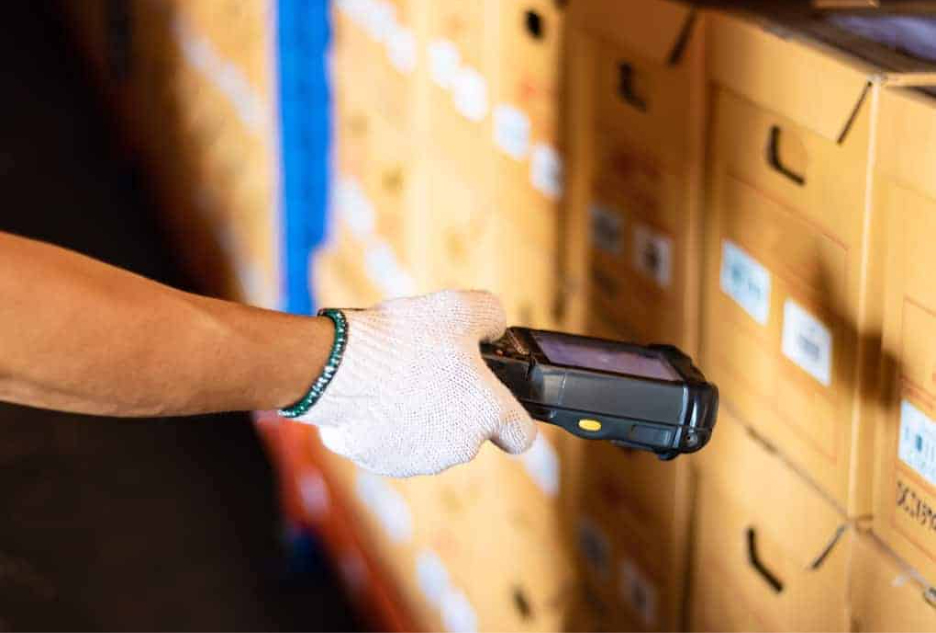
Printing a code is not the same as confirming that it is correct.
Automated vision inspection can verify that each package carries the required information. Inspection systems can check:
- Code presence
- Character accuracy
- Date accuracy
- Lot accuracy
- Print quality
- Position
- Contrast
- Barcode readability
- Data Matrix readability
When a problem is detected, the system may reject the product, alert the operator, or stop the line.
Verification is especially important for high-speed operations where a coding issue can affect large quantities of product in a short period.
It is also valuable when manufacturers must demonstrate compliance with retailer, customer, or regulatory requirements.
Build Date Coding Into the Quality Process
Date coding should be included in standard quality assurance procedures. Quality checks may occur:
- At line startup
- During product changeovers
- At scheduled intervals
- After maintenance
- After consumable replacement
- At shift changes
- Before final release
A quality checklist should confirm:
- Correct product message
- Correct date
- Correct lot code
- Correct placement
- Acceptable print quality
- Appropriate adhesion
- Code verification performance
Documented checks provide evidence that coding controls are functioning properly.
Plan for Product and Packaging Changeovers
Food and beverage manufacturers frequently run multiple products, flavors, sizes, and packaging formats on the same line.
Every changeover creates an opportunity for coding errors. Manufacturers should establish standardized changeover procedures that include:
- Confirming the new production order
- Selecting the correct coding recipe
- Verifying date calculations
- Confirming packaging format
- Checking printhead position
- Inspecting the first coded product
- Documenting approval before full production
Automated recipe management can simplify this process.
When packaging dimensions change, mechanical adjustments may also be required to maintain proper code position.
Control Date Calculations Carefully
Many products require the coding system to calculate a future best-before or expiration date based on the production date.
For example, a product produced on July 16 may require a date 90 days, six months, or one year later.
These calculations should be automated and validated. Manufacturers should consider:
- Leap years
- Month length
- Time zones
- Midnight production
- Shift transitions
- Daylight saving time
- Product-specific shelf life
- Market-specific rules
Incorrect date calculations can create significant waste and compliance risk.
Each product recipe should contain an approved shelf-life rule that cannot be casually modified by operators.
Account for the Production Environment
Food and beverage plants can be demanding environments for coding equipment. Potential challenges include:
- Moisture
- Condensation
- Washdown
- Dust
- Grease
- Sugar
- Flour
- Temperature changes
- Refrigeration
- Freezing conditions
Equipment should be selected and installed with these conditions in mind.
Protective enclosures, appropriate ingress ratings, environmental controls, and proper mounting can improve reliability.
Printheads and sensors should be positioned where they are less likely to be struck, contaminated, or exposed to direct washdown.
Ink formulations should also be compatible with plant temperatures and product surface conditions.
Maintain Coding Equipment Proactively
Poorly maintained equipment can lead to faded, incomplete, or missing codes. Preventive maintenance should include:
- Cleaning printheads
- Inspecting nozzles
- Cleaning laser lenses
- Checking filters
- Inspecting cables
- Verifying sensors
- Reviewing ink levels
- Checking solvent levels
- Replacing worn components
- Confirming software backups
Maintenance schedules should be based on production volume, operating conditions, and manufacturer recommendations.
Remote monitoring and predictive diagnostics can help identify potential problems before they cause downtime.
Manage Consumables Consistently
For inkjet and thermal transfer systems, consumable management is essential. Manufacturers should use approved:
- Inks
- Solvents
- Cartridges
- Ribbons
- Cleaning solutions
- Filters
Using unapproved consumables may affect print quality, equipment reliability, warranty coverage, and code durability.
Consumables should be stored according to supplier guidelines and rotated to prevent expiration.
Inventory levels should be monitored so production is not interrupted by shortages.
Automated replenishment programs can simplify this process.
Train Operators and Maintenance Teams
Even the most advanced coding system can fail if operators are not properly trained. Training should cover:
- Equipment startup
- Message selection
- Code inspection
- Consumable replacement
- Basic troubleshooting
- Changeover procedures
- Cleaning requirements
- Escalation procedures
Maintenance teams should receive more advanced instruction on diagnostics, calibration, component replacement, and software communication.
Refresher training should be provided periodically, especially when new equipment, packaging formats, or regulations are introduced.
Prepare for Traceability and Recall Events
Date coding should support a larger traceability strategy. Manufacturers should be able to connect a finished product code with records such as:
- Ingredient lots
- Supplier information
- Production line
- Processing conditions
- Operator shift
- Packaging materials
- Quality inspection results
- Distribution destination
This creates a more complete chain of custody. During a recall, the manufacturer should be able to quickly identify:
- Which products are affected
- Where they were produced
- When they were produced
- Which ingredients were used
- Where the products were shipped
Reliable coding helps reduce recall scope and response time.
Track Coding Performance
Continuous improvement requires measurement. Manufacturers should track key coding metrics such as:
- Code reject rate
- Missing-code rate
- Verification failure rate
- Rework volume
- Scrap caused by coding
- Coding-related downtime
- Mean time between failures
- Mean time to repair
- Consumable usage
These metrics can reveal patterns and help teams identify root causes.
For example, recurring print quality issues on one line may indicate poor printhead positioning, environmental contamination, incorrect ink, or inconsistent package presentation.
Consider Future 2D Coding Requirements
Food and beverage packaging is moving toward more advanced machine-readable codes.
Traditional linear barcodes are increasingly being supplemented or replaced by 2D codes that can carry more information. Potential applications include:
- Product identification
- Lot information
- Expiration dates
- Consumer engagement
- Recall information
- Supply chain data
- GS1 Digital Link
Manufacturers planning new date coding systems should consider whether the equipment can support higher-resolution 2D codes and future data requirements.
This may require improved printer resolution, better substrate control, vision inspection, and stronger data integration.
Common Date Coding Mistakes to Avoid
Several recurring mistakes create unnecessary risk. These include:
- Using ambiguous date formats
- Allowing unrestricted manual entry
- Placing codes over graphics
- Failing to test ink adhesion
- Ignoring condensation
- Skipping startup verification
- Using incorrect shelf-life calculations
- Running unapproved consumables
- Delaying maintenance
- Failing to inspect machine-readable codes
Avoiding these common errors can significantly improve coding reliability.
Building a More Reliable Date Coding Program
A strong date coding program combines technology, process discipline, and quality control. The most effective approach includes:
- Clearly defined coding standards
- Substrate-specific technology selection
- Automated data integration
- Controlled user permissions
- Vision inspection
- Preventive maintenance
- Operator training
- Documented quality checks
- Traceability integration
- Continuous performance measurement
Manufacturers should review their coding program regularly as product portfolios, packaging formats, retailer requirements, and regulations evolve.
Conclusion
Effective date coding is essential for food and beverage CPG manufacturers.
Clear and accurate codes help protect consumers, maintain product quality, improve inventory management, support traceability, and reduce the impact of recalls.
By following proven date coding best practices, manufacturers can reduce coding errors, minimize production waste, improve compliance, and build greater confidence throughout the supply chain.
The strongest programs combine the right printing or marking technology with automated data management, verification, preventive maintenance, operator training, and well-defined quality procedures.
Contact REA JET to learn how advanced inkjet printing, laser marking, software integration, and code verification solutions can help improve date coding performance across your food and beverage production operations.
 Or call 440-232-0555
Featured Coding & Marking Technologies View all
Most-requested coding & marking systems.
- 01 Large Character Inkjet Printers (DOD) Direct-to-product marking for cases, pallets, lumber, building materials and other porous surfaces
- 02 High-Resolution Inkjet Printers Print sharp text, logos, barcodes and 2D codes directly on products and packaging
- 03 Laser Systems Permanent, maintenance-free marking for traceability, compliance and product identification
- 04 Barcode Verification Systems Verify barcode quality and readability to meet retailer, GS1 and customer requirements
- 05 Small Character Inkjet Print date, lot, batch and traceability codes for production lines and packaging
- 06 Spray Mark Technology Reliable product identification and defect marking for manufacturing and industrial processes